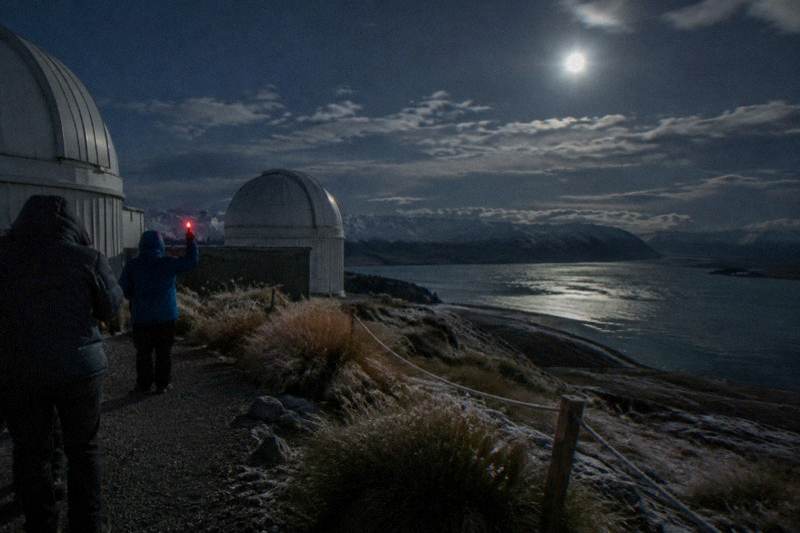
Mount John Walk Before Or After A Stargazing Tour
Mount John sits about 15 minutes by car above Lake Tekapo village, and its summit road runs by day while the stargazing tours run after dark. Here is how the two fit together.
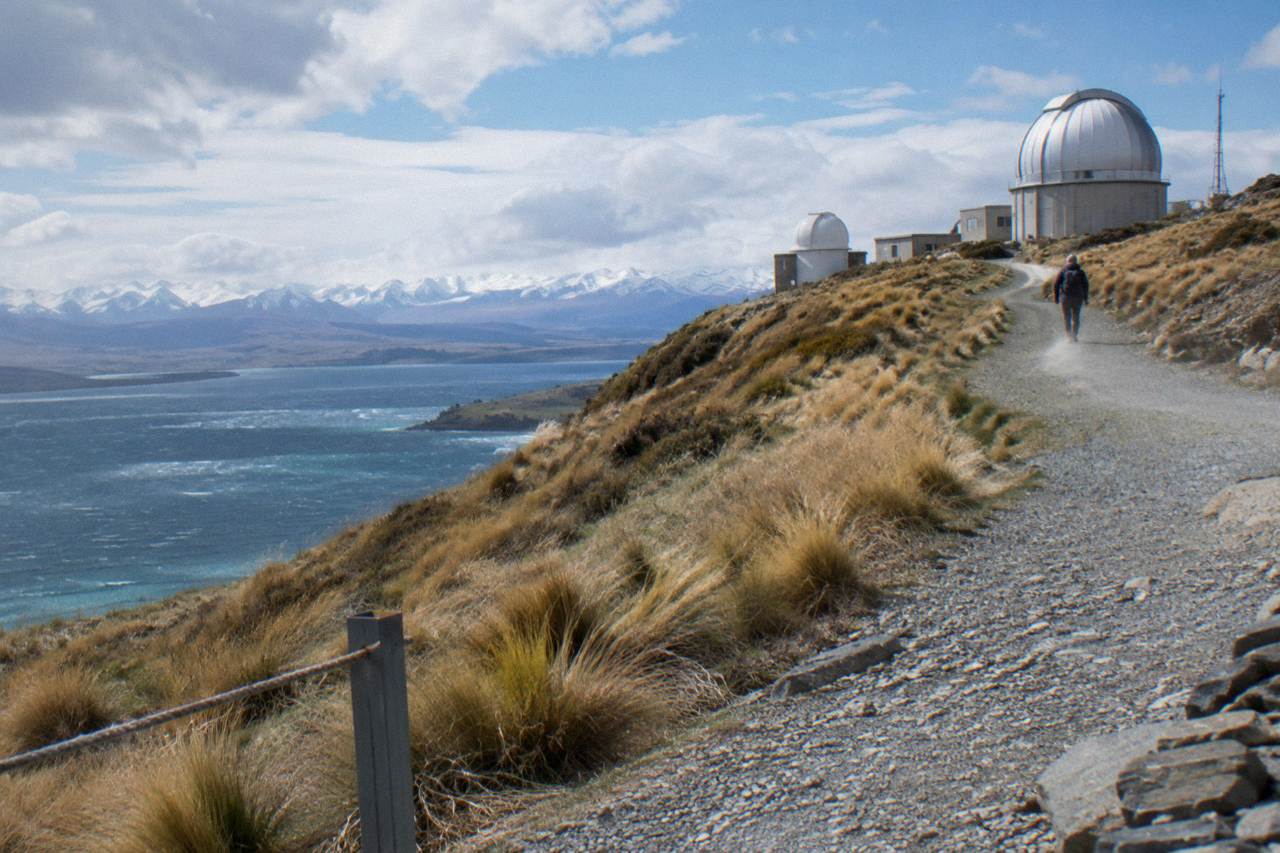
Short answer
Yes, you can do both in one day. The Mount John access road is open in daytime, about 15 minutes from the village via Godley Peaks Road, with a small per-vehicle road fee at the gate. Stargazing tours then follow sunset, and the Dark Sky Project Summit Experience runs 1 hour 45 minutes from $133.00 per person.
Mount John is the hill directly above Lake Tekapo village, home to the University of Canterbury's observatory and one of the most photographed summit views in the Mackenzie Basin. By day the summit road is open to cars, a daytime cafe operates at the top, and walkers and photographers make the trip for the view over the turquoise lake. By night the same summit becomes the venue for guided stargazing, with telescopes, astronomy guides and, on the Dark Sky Project Summit Experience, a bus ride up through the dark.
The two are not in competition. A daytime visit and a night tour use the same mountain at opposite ends of the clock, and many travellers plan both in a single Lake Tekapo stay. This guide sets out how the access road works, what the road fee and vehicle limits mean, how the summit stargazing tour is structured, and how to judge the value of each option.
Can You Visit Mount John By Day And Stargaze At Night?
Yes, and the schedule works in your favour. The access road to the Mount John summit is open in daytime, about 15 minutes by car from Lake Tekapo village via the Godley Peaks Road off State Highway 8. Stargazing tours then run seven days a week with times that follow sunset, so a daytime summit visit ends comfortably before a night tour begins.
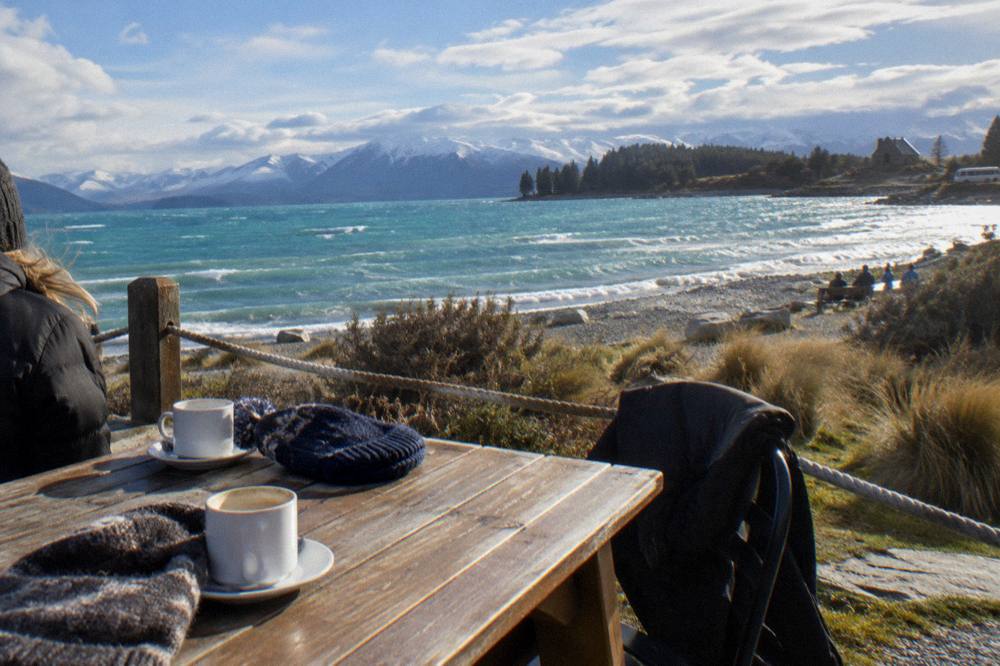
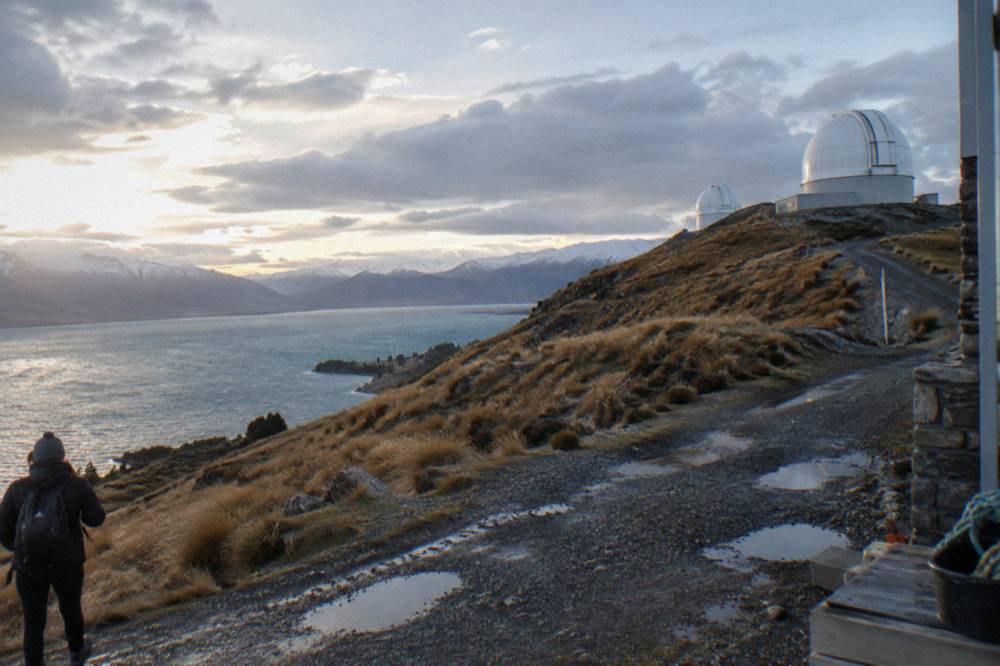
The daytime and night-time uses of the mountain are deliberately separated. The road up is a daytime road: it may close in some weather, vehicles over 12 seats are not permitted, and a small road fee per vehicle is paid at the gate by card. Once you are at the top there is a daytime cafe, though the hours change, so check before counting on lunch with a view. The summit itself carries the working observatory domes of the University of Canterbury, and the lookout over the lake and the Southern Alps is the reason most people make the drive.
The night shift belongs to the tours. Because tour start times follow sunset, and sunset at Tekapo runs from around 8:30 pm in early November to around 9:20 pm at the December solstice, a stargazing night in summer starts late, often with true darkness not arriving until roughly 10 pm in December and January. That leaves a long, useful afternoon for the summit, the lakefront, or the Church of the Good Shepherd before you check in for a tour.
One point worth planning around: you cannot simply drive yourself up for stargazing. The night-time summit access on the Dark Sky Project Summit Experience is part of the ticket, with return transport between the base at 1 Motuariki Lane and the summit included. Independent night access is not part of the deal, so the evening telescope session is a booked product, not a free drive-up. For more on the whole night-tour landscape, the guide to Lake Tekapo stargazing tour options compares the operators side by side.
The Aoraki Mackenzie area was designated an International Dark Sky Reserve in 2012, covering 4,367 square kilometres across Aoraki / Mount Cook National Park and the Mackenzie Basin, with outdoor lighting controls dating from the early 1980s that protect the Mt John Observatory, as the reserve's official place page records. That designation is why the mountain has both a working observatory and a busy stargazing tourism season.
How Do You Get To The Mount John Summit From Lake Tekapo Village?
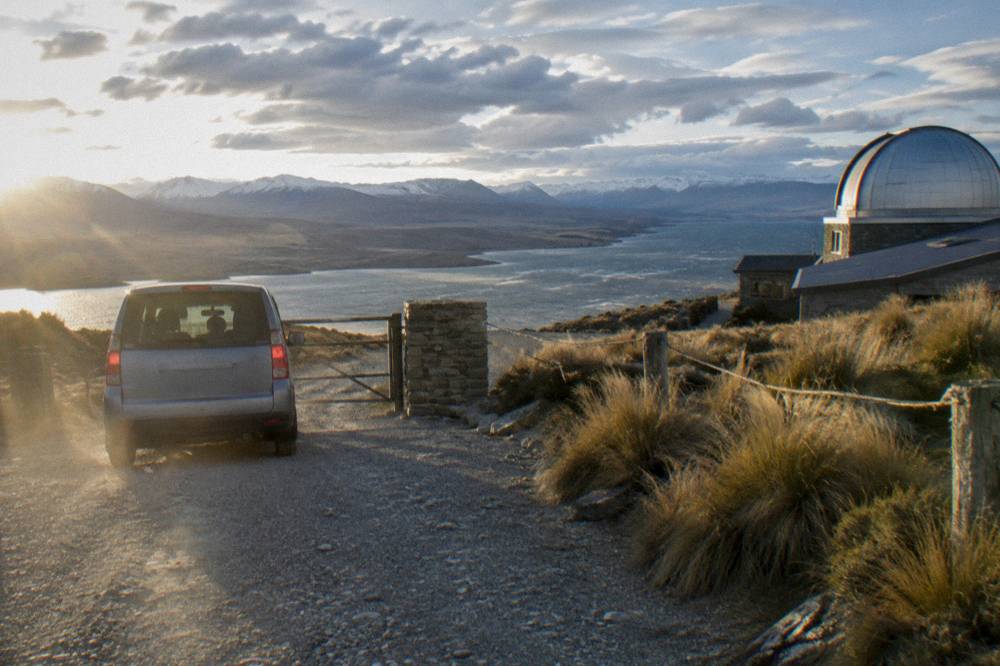
By car it is about 15 minutes from the village via the Godley Peaks Road off State Highway 8. A small road fee per vehicle is paid at the gate by card, the road is open in daytime, vehicles over 12 seats are not permitted, and it may close in some weather. A daytime cafe sits at the summit, so check the hours before you go.
The route is straightforward once you know which turn to take. Godley Peaks Road leaves State Highway 8 on the western side of the village and climbs past farmland to the summit gate. The fee is per vehicle, not per person, which makes a car of three or four travellers cheaper per head than any tour, and it is paid by card at the gate.
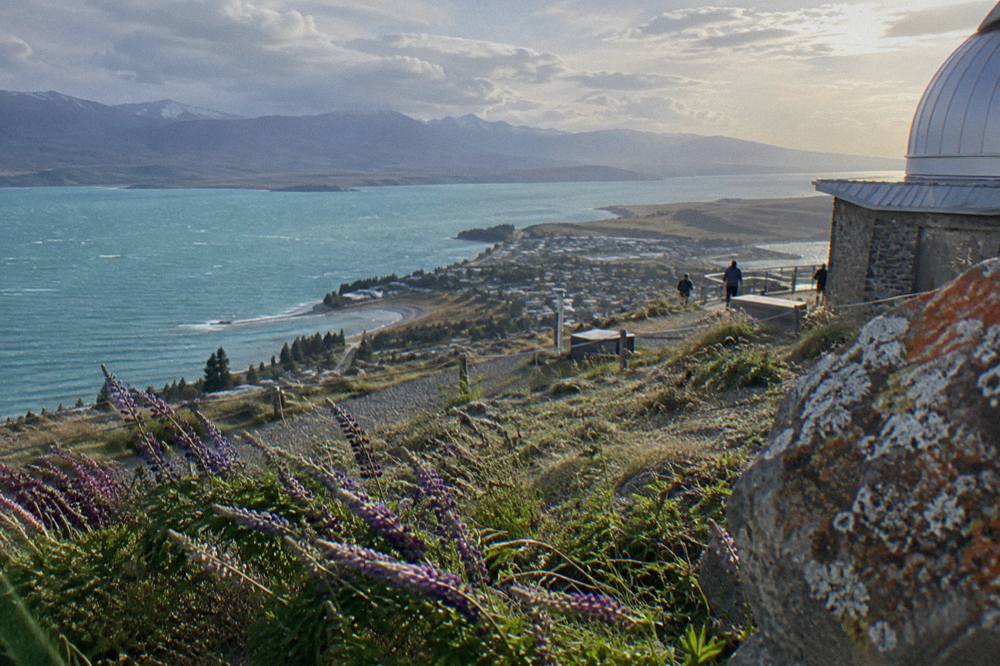
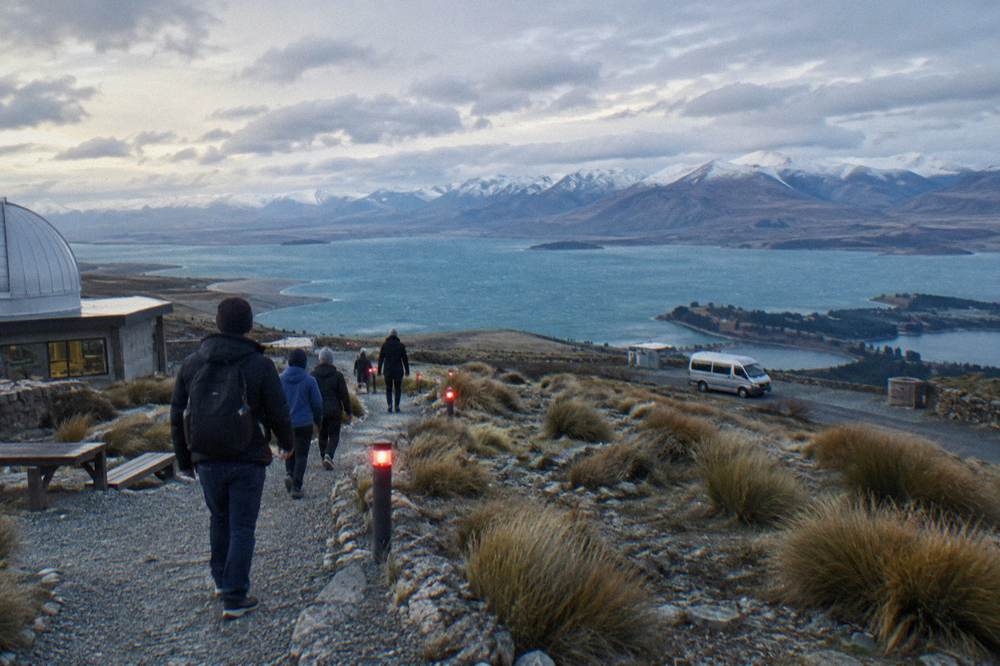
At the top, the payoff is the full sweep of the Mackenzie Basin: Lake Tekapo below with its glacial rock flour turquoise, and, on a clear day, the snow line of the Southern Alps. The lake sits at about 710 metres above sea level and the summit of Mount John higher again, so the elevation change over those 15 minutes is dramatic. Bring a layer even in summer; nights are cold at altitude here, as the Dark Sky Project itself tells its guests, and a daytime wind on the summit can feel wintry in any month.
If you are staying in Tekapo without a car, the summit is a genuine problem to solve rather than a five-minute hop. The village itself is compact and walkable, but the mountain is not a village stroll. The guide on getting to Lake Tekapo without a car covers the transport picture, and the Dark Sky Project Summit Experience, which includes its own transport, becomes the practical way to reach the summit after dark.
There is a walking track around the summit area, the Summit Circuit: the drive is the standard access, and the circuit is a bonus if conditions suit. Stay on formed paths, keep to daylight, and treat the observatory domes as the working scientific site they are.
The practical facts for a daytime summit visit, at a glance:
| Detail | What applies |
|---|---|
| Distance from village | About 15 minutes by car via Godley Peaks Road off State Highway 8 |
| Road fee | A small fee per vehicle, paid by card at the gate |
| Opening | Daytime only; may close in some weather |
| Vehicle limit | Vehicles over 12 seats not permitted |
| Facilities at the summit | A daytime cafe, check the hours; observatory domes |
| Best time of day | Afternoon, leaving time for dinner before a night tour check-in |
For travellers weighing this against the evening product, three stargazing experiences in the area give a sense of the spread.
What Does The Dark Sky Project Summit Experience Actually Include?
The Summit Experience is a 1 hour 45 minute guided stargazing tour from $133.00 per person, rated 4.6 across 347 reviews. It runs from the Dark Sky Project base at 1 Motuariki Lane, includes return bus transport to the Mount John summit, an extreme cold weather jacket on loan, a 16 inch telescope in a dome, and a minimum age of 10.
The structure matters for planning. You check in at the base, 1 Motuariki Lane, 15 minutes before departure, and the listed 1 hour 45 minutes includes the bus ride, which takes about 15 minutes each way to the summit. That leaves roughly an hour of guided time at the top. Hotel pickup is not included, so the base is your start point. The tour is not wheelchair accessible, and moderate fitness helps because the summit involves a walk of about 100 metres up a gravel incline plus a few steps in the dark.
The telescope is the centrepiece: a 16 inch instrument inside a dome at the working observatory, with an expert astronomy guide and storytelling alongside the viewing. Photos are allowed with the flash off, which is a sensible policy on any dark-sky site. The jacket loan is worth taking seriously: the summit at night is colder than the village, and the extreme cold weather jackets supplied are built for exactly that.
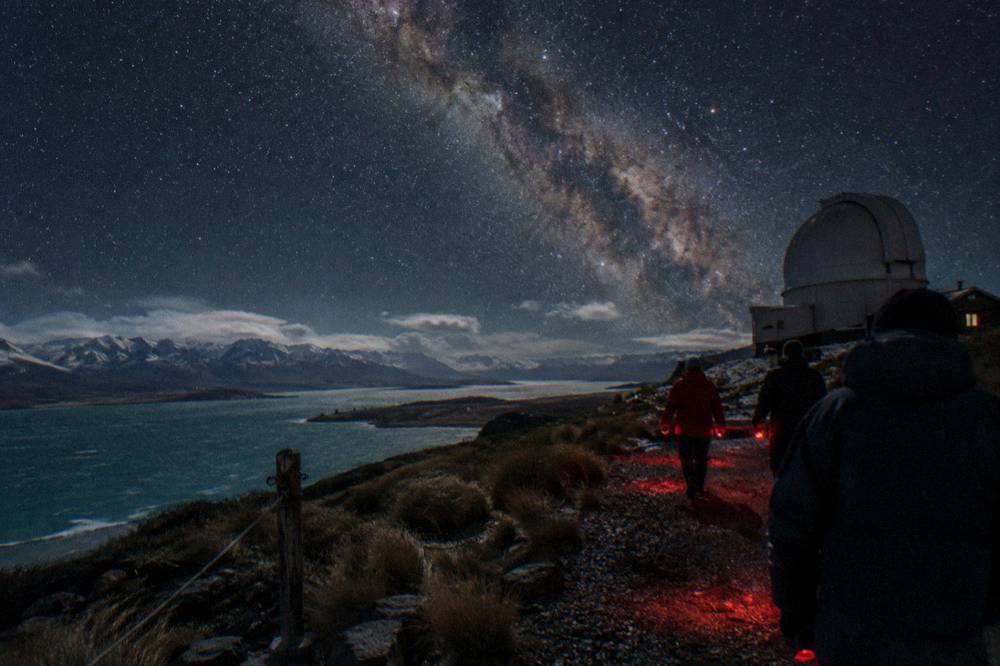
The weather policy is honest rather than promotional. If outdoor stargazing is not possible, guests are offered an alternative night-time indoor experience, or a reschedule subject to availability, a voucher or a refund. The operator publishes no fixed cancellation hours, and it says plainly that it cannot guarantee what you will see: the Milky Way and any aurora depend on weather and moonlight. All 25 listings on this site state free cancellation up to 24 hours before the start for a full refund, in the booking page's own wording.
Booking-wise, tours run seven days and same-day bookings are possible, though spots are limited, so a summer night is better locked in ahead. Check availability alongside the longer Mount John Observatory stargazing tour guide, which goes deeper on the observatory itself.
The contrast with the daytime visit is the point of this article: by day you drive up yourself and pay a per-vehicle road fee; by night the bus, the guide, the dome telescope and the summit access are bundled into one ticket. You are paying for the telescope and the interpretation as much as for the mountain.
Mount John Summit Tour Or A Village Stargazing Tour: Which Suits You?
The Summit Experience, from $133.00, is the only tour here that stargazes on Mount John itself. The alternatives cluster lower: Silver River's alpine experience is from $55.00 per person, 4.6 across 864 reviews, and Chameleon's stargazing experience is from $72.00, 4.9 across 788 reviews. Price, group size and setting, not sky quality, are the real differences.
No tour on this site promises a better sky than another, and none should. What differs is where you stand, what you look through, and what the ticket bundles. The Mount John product gives you the observatory summit at 1,029 metres, a dome telescope and the bus ride. Silver River's Alpine Stargazing Experience, 1 hour 15 minutes from $55.00, includes roundtrip transport from its check-in office to its own stargazing site, warm down jackets, 14 inch telescopes and a digital photo link, with a group cap of 10. Chameleon's Lake Tekapo Stargazing Experience, 1 hour 30 minutes from $72.00, meets at 70 Andrew Don Drive a four-minute drive from the village centre and runs a lounge-style setup with mattresses, blankets, a fire bowl, hot chocolate and marshmallows, plus a 9.25 inch telescope and a smart telescope.
The pattern is simple: the summit tour costs more than double the cheapest option and carries a minimum age of 10, while Chameleon and Silver River do not state a minimum age in their listings. If you are travelling with younger children, that single flag may decide the question before price does. Group sizes also differ: Silver River caps at 10, the Mount John summit tour states no cap, and Tekapo Star Gazing's hot-pool product at Tekapo Springs runs up to 34 per session with hot pool use as part of the ticket.
| Tour | Setting | Duration | From price | Rating and reviews | Group max | Min age |
|---|---|---|---|---|---|---|
| Mount John Summit Stargazing Experience | Mount John summit observatory | 1 hr 45 min | $133.00 per person | 4.6 from 347 reviews | Not stated | 10 |
| Alpine Stargazing Experience with a Guide | Alpine site, transport included | 1 hr 15 min | $55.00 per person | 4.6 from 864 reviews | 10 | Not stated |
| Lake Tekapo Stargazing Experience | Village-edge stargazing field | 1 hr 30 min | $72.00 per person | 4.9 from 788 reviews | Not stated | Not stated |
| Tekapo Star Gazing Tour, Soak in the Stars | Tekapo Springs hot pools | 1 hr 30 min | $101.55 per person | 4.3 from 121 reviews | 34 | 10 |
If the price spread between these tours leaves you unsure which one to pick, the guide to what each Tekapo stargazing tour price actually buys explains how telescope size, transport, and summit access differ.
All four state free cancellation up to 24 hours before the start for a full refund, and all four are weather-dependent products in a mountain climate. The Soak in the Stars tour is the clearest example of how operators handle that: it runs even if some or none of the sky is visible, with an indoor session instead, and a 25% refund applies if under 30 minutes of telescope viewing happens. The stargazing-plus-hot-pools pairing has its own dedicated comparison guide if that hybrid appeals.
For the walker, though, the summit tour has one advantage nothing else on the list can match: you see Mount John in daylight on your own terms, then return to it at night through a working observatory. The two experiences of the same hill bookend each other, and the storytelling from the astronomy guide lands differently when you already know the shape of the road below you.
What Should You Know Before Combining The Walk And A Tour In One Day?
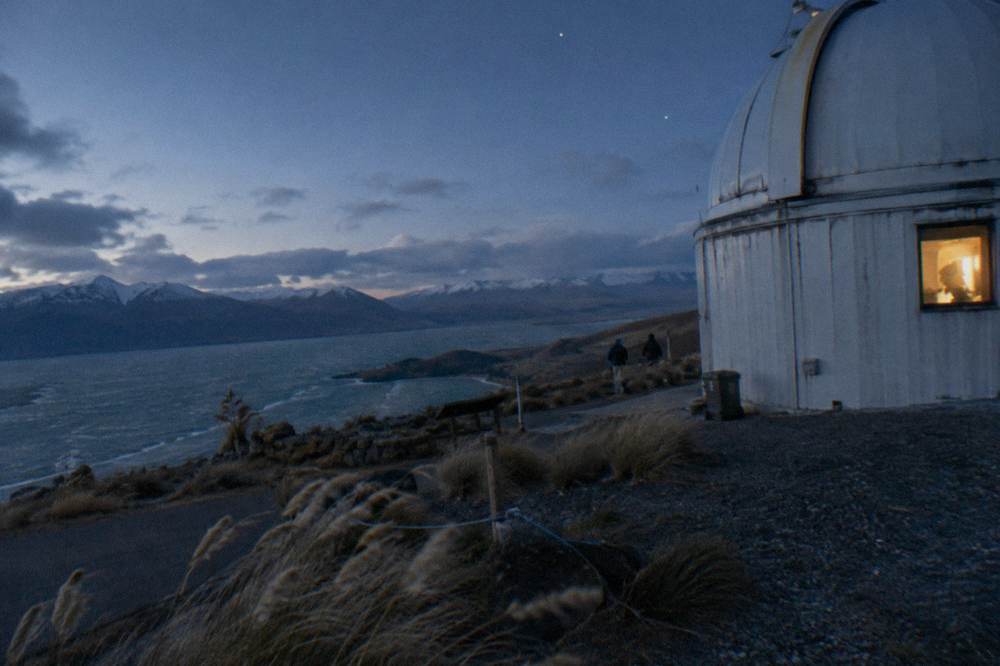
Plan the summit visit for the afternoon, dinner in the village, and check-in at the Dark Sky Project base 15 minutes before departure. In summer, sunset near 9 pm or later means late finishes, so book nothing for early the next morning. Check the NZTA Journey Planner for State Highway 8 conditions on the day, and carry a warm layer for the summit even in sunshine.
Timing is the easy part; the details around it are where trips wobble. Start with the road: the Mount John access road is daytime-only and may close in some weather, so treat it as a plan rather than a guarantee. The NZTA Journey Planner is the official source for highway conditions on the day. Pay the per-vehicle road fee by card at the gate, park at the top, and give the cafe a chance if it is open, checking the hours rather than assuming.
Next, the evening. Check-in for the Summit Experience is at 1 Motuariki Lane, and being 15 minutes early is the stated requirement. Hotel pickup is not included on this tour, so budget the walk or drive from wherever you are staying. In December and January, true darkness starts roughly 10 pm, which means the tour itself starts late and finishes later still; a 1 hour 45 minute experience that begins around 10 pm has you back in the village close to midnight. That is a fine schedule, but not one to pair with a dawn departure the next day, and worth remembering if you are on a wider South Island loop.
Layering deserves more respect than it usually gets. The lake sits at about 710 metres, the summit higher, and nights are cold here even in summer, which is why the Dark Sky Project loans extreme cold weather jackets on the summit tour and tells Crater Experience guests to dress warmly. For your daytime walk, bring a windproof layer and sun protection: the UV at altitude in New Zealand is fierce, and the tussock offers no shade. The dedicated what to wear on a Lake Tekapo stargazing tour guide covers the evening wardrobe in detail.
The moon is the one planning variable most visitors overlook. Around new moon the sky is at its darkest, while a full moon washes out faint objects; the operator itself frames the view as dependent on weather and moonlight, not as a guaranteed spectacle. If your dates are flexible and the night sky is the priority, aiming near a new moon is the qualitative move; no month is promised here, and no tour guarantees the Milky Way or an aurora.
Finally, be honest about fitness and access. The summit tour involves about 100 metres up a gravel incline plus a few steps in the dark, is not wheelchair accessible, and carries a minimum age of 10. The daytime drive avoids all of that, which is exactly why some families do the summit by day and one of the other stargazing tours, which do not state a minimum age, by night.
What Happens If Weather Affects Your Mount John Plans?
The access road may close in some weather, which ends the daytime drive up; flights and stargazing are separate decisions made by each operator on the day. If outdoor stargazing is not possible on the Dark Sky Project tours, guests are offered an indoor night-time alternative, a reschedule subject to availability, a voucher or a refund. No operator guarantees the sky.
Weather in the Mackenzie Basin can change fast, and the summit road feels it first. If the road closes on the day of your planned visit, the village still has the lakefront, the Church of the Good Shepherd, with grounds open in daylight and a koha requested at the gate, and the drive to the Lake Pukaki lookouts. The daytime cafe at the summit is likewise subject to the road and its own hours. Nothing here is booked or paid in advance for the daytime trip beyond the gate fee, so a road closure costs you little.
The night products handle weather through stated policies rather than improvisation. The Dark Sky Project's weather alternative is an indoor night-time experience, or a reschedule, voucher or refund, and it publishes no fixed cancellation hours, so do not plan around any. Tekapo Star Gazing runs with an indoor session when the sky is not visible and applies a 25% refund when under 30 minutes of telescope viewing occurs. What every booking page on this site does state is free cancellation up to 24 hours before the start for a full refund, in that wording, which gives you a clean exit if the forecast turns a day out.
For the wider area, the Department of Conservation's Aoraki Mount Cook National Park page is the authority on conditions further north, where the Hooker Valley Track runs 3 to 4 hours return and Aoraki stands at 3,724 metres. If a Mount Cook day is on your itinerary alongside Tekapo, that page is worth reading before you commit to a packed schedule.
A practical sequencing note: if you have two nights in Tekapo, book the stargazing tour for the first night. If weather takes it, the reschedule option has a second night to land on, and your daytime summit visit can shift independently. One-night visitors should pick whichever of the day or night experience matters more and treat the other as the flexible half.
The site you are reading, Lake Tekapo Day Tours, covers 25 day tours, stargazing nights, scenic flights and small-group trips that run at or through Tekapo, so if the summit plan collapses, the alternatives here are catalogued rather than guessed at.
Is A Mount John Day Visit Plus A Summit Tour Too Much Of The Same Hill?
For most travellers, no: the two experiences share the location but almost nothing else. By day you get the drive, the cafe, the view and the circuit at your own pace for a per-vehicle road fee. By night you get a guided observatory session with a 16 inch telescope, a dome, a loaned jacket and a bus from the base, from $133.00 per person.
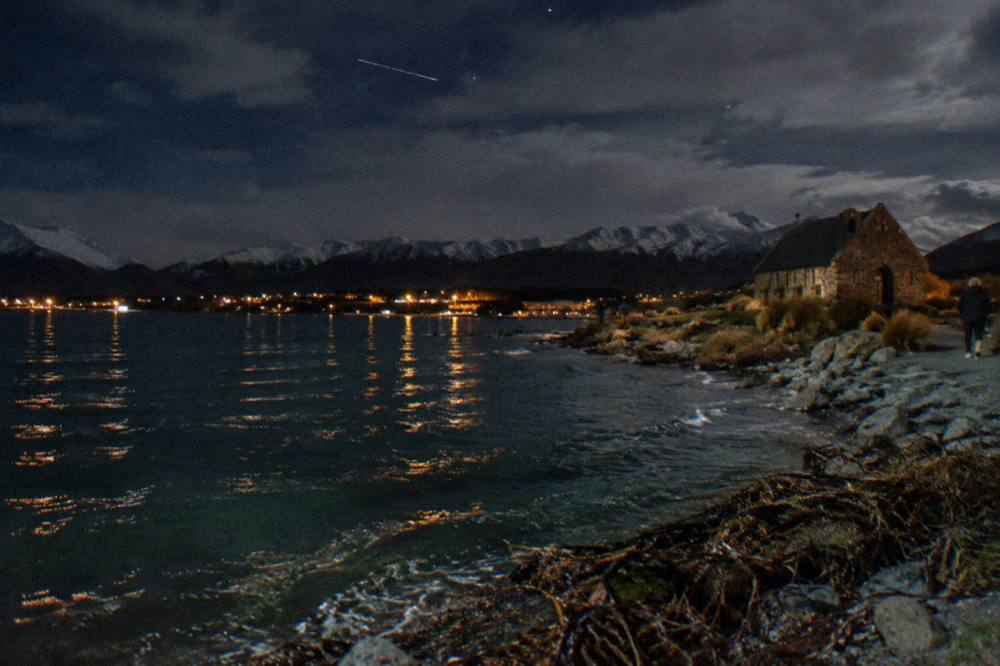
The case for doing both is that night transforms the mountain. The view you photographed at noon is gone; what replaces it is a working observatory with a dome telescope pointed at whatever the sky offers that night, an astronomy guide interpreting it, and a darkness the village below cannot fully escape because of its own lights. Others are happy with the postcard. Both are reasonable positions, and the price gap between a per-vehicle road fee and a $133.00 per person ticket is real money for a family.
The case against doubling up is practical. If your night is short, your tolerance for cold is low, or you have children under 10, the summit tour's minimum age rules it out entirely, and a Chameleon or Silver River stargazing option becomes the night activity while the daytime drive covers Mount John. Silver River's Alpine Stargazing Experience at $55.00 per person, 4.6 across 864 reviews, is the most-reviewed and cheapest per-person stargazing product in the area and includes its own transport to a dark site; Chameleon's at $72.00, 4.9 across 788 reviews, is the highest rated with more than 100 reviews. Both do not state a minimum age in their listings.
| Plan | Daytime | Night-time | Best for | Watch out for |
|---|---|---|---|---|
| Full Mount John | Drive up, cafe, summit view | Summit Experience from $133.00 | Couples, keen astronomers, first-timers with a clear evening | Late summer finishes, min age 10, fitness on the incline |
| Split the mountain | Drive up Mount John by day | Silver River alpine from $55.00 or Chameleon from $72.00 | Families with under-10s, budget-conscious travellers | Two separate check-in points to find |
| Village only | Lakefront and Church of the Good Shepherd | Any stargazing tour | One-night stays, tight schedules | Missing the summit view entirely |
However you arrange it, keep the two halves independent in your planning. The daytime road can close while the night is clear, and the night can cloud over after a perfect blue day. Booking the stargazing tour first, then fitting the drive around it, is the order most itineraries settle into, and the 24-hour free cancellation window stated on every booking page here gives you room to adjust if the forecast firms up.
Whichever night you choose, the daytime half of this plan costs a per-vehicle gate fee and an hour or two of your afternoon. The night half takes a booking, a warm layer and realistic expectations about the sky. Together they are the complete Mount John story: the view by day, the reason for the observatory by night.
Common Questions About The Mount John Walk And Stargazing Tours
Can You Walk Mount John Before A Stargazing Tour?
Yes. The summit road is open in daytime, about 15 minutes by car from the village via Godley Peaks Road, with a small per-vehicle road fee at the gate, and stargazing tours run seven days with times that follow sunset. In summer the late sunset leaves ample time between a daytime visit and check-in.
Do You Have To Pay To Go Up Mount John?
A small road fee per vehicle is paid at the gate by card for the summit access road. The road is open in daytime, vehicles over 12 seats are not permitted, and it may close in some weather.
Does The Mount John Stargazing Tour Include Transport?
The Dark Sky Project Summit Experience, 1 hour 45 minutes from $133.00 per person, includes return bus transport between the base at 1 Motuariki Lane and the summit, about 15 minutes each way. Hotel pickup is not included.
Is There A Minimum Age For The Mount John Summit Experience?
Yes, the Summit Experience states a minimum age of 10. The Dark Sky Project's Cowan's Private Observatory experience states a minimum age of 5, and the Chameleon and Silver River stargazing tours do not state a minimum age in their listings.
What Happens If It Is Cloudy On The Night Of The Tour?
If outdoor stargazing is not possible, the Dark Sky Project offers an alternative night-time indoor experience, or a reschedule subject to availability, a voucher or a refund. The operator does not guarantee what you will see; the view depends on weather and moonlight.
Is The Mount John Summit Accessible Without A Car?
The daytime road is a drive, and the Dark Sky Project Summit Experience includes transport from its base, so booking it is the practical car-free way to reach the summit. The Summit Experience is not wheelchair accessible and involves about 100 metres up a gravel incline plus a few steps in the dark.