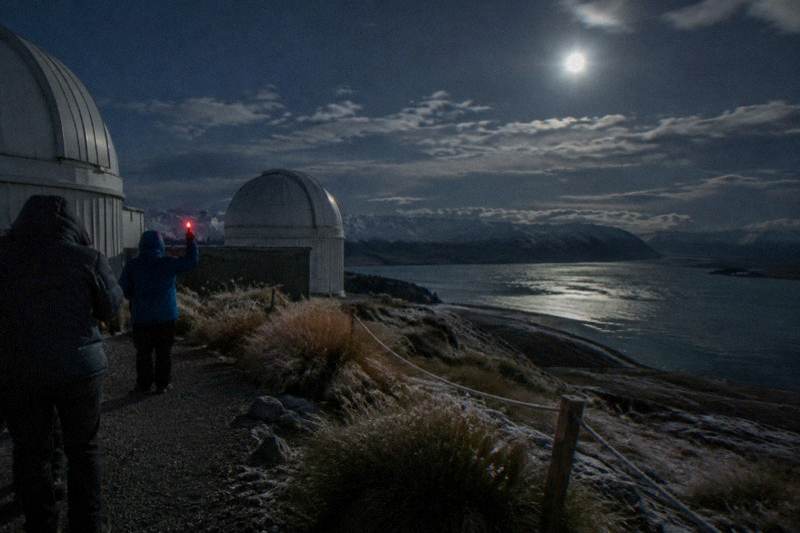
Mount John Observatory Stargazing Tour: How The Night Works
The Mount John summit stargazing tour is the one Tekapo night that puts you inside a working observatory, at 1,029 m, with a 16 inch telescope and a guide who reads the sky above the lake.
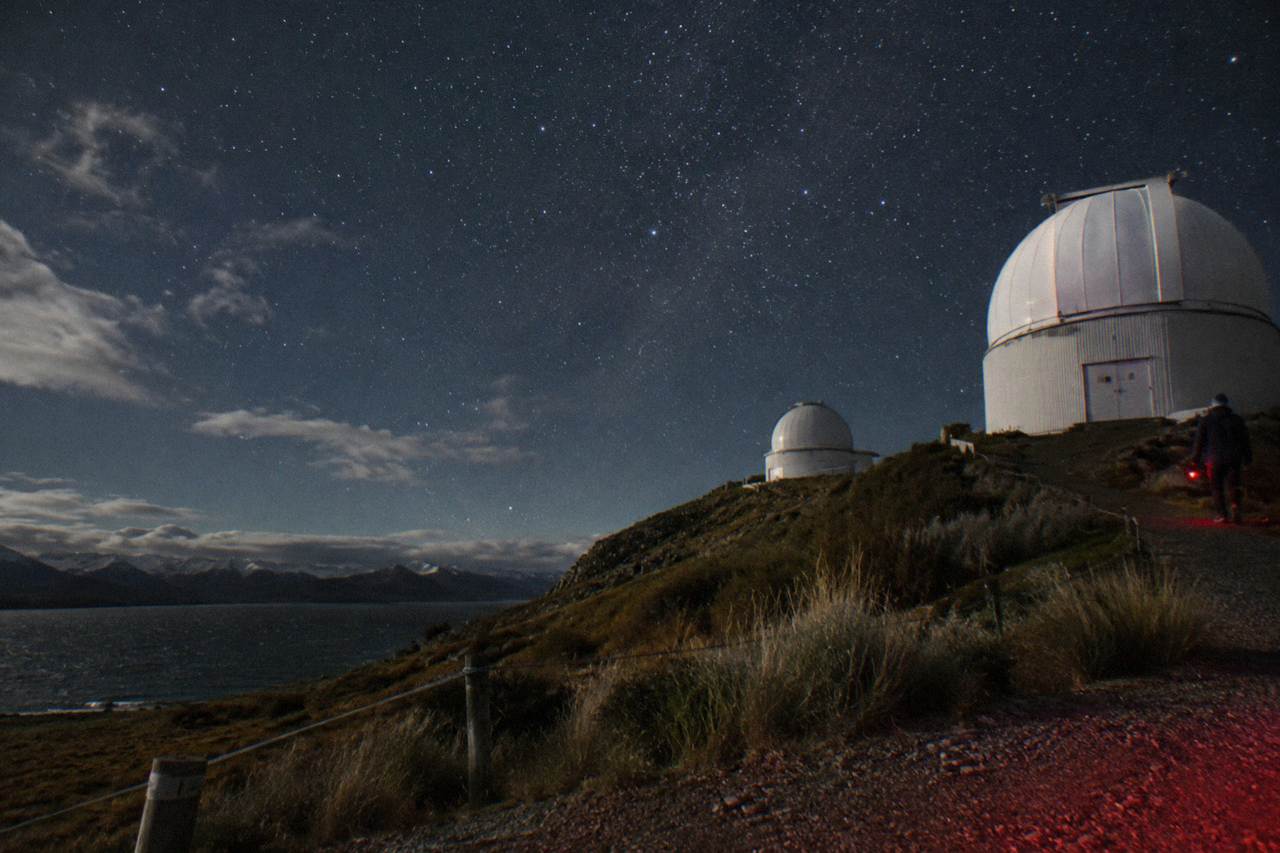
Short answer
The Dark Sky Project Summit Experience at Lake Tekapo runs 1 hour 45 minutes from $133.00 per person, minimum age 10, with a cold-weather jacket loaned and a 16 inch telescope in a dome at the summit of Mount John, reached by a short bus ride from the base at 1 Motuariki Lane.
The road to the top of Mount John is closed to the public after dark, which is the simple reason the summit stargazing tour exists at all. The Dark Sky Project holds the keys to that road, and its Summit Experience is the only commercial night that puts travellers at the University of Canterbury's observatory, 1,029 m above Lake Tekapo, with a dome, a telescope and a guide. The mountain sits inside a 4,367 km2 International Dark Sky Reserve, designated in 2012, where outdoor lighting has been controlled since the early 1980s to protect exactly this patch of sky. This page walks through how the night works, what the ticket covers, what it costs, and how the experience compares with the other stargazing tours in the village, with prices and ratings for every tour included throughout. For the widest angle on all the night options, start with the guide to Tekapo stargazing tours.
What Is The Mount John Observatory Stargazing Tour At Lake Tekapo?
The Summit Experience is a guided night stargazing tour that runs 1 hour 45 minutes, from $133.00 per person, operated by the Dark Sky Project from its base at 1 Motuariki Lane in Lake Tekapo village. It includes return transport by bus to the summit of Mount John, an astronomy guide, access to a 16 inch telescope inside a dome, and a loaned extreme cold weather jacket, with a minimum age of 10. If you're weighing this against the other stargazing options around Lake Tekapo, the guide to Tekapo stargazing tour costs breaks down what each tour includes and how the prices stack up.
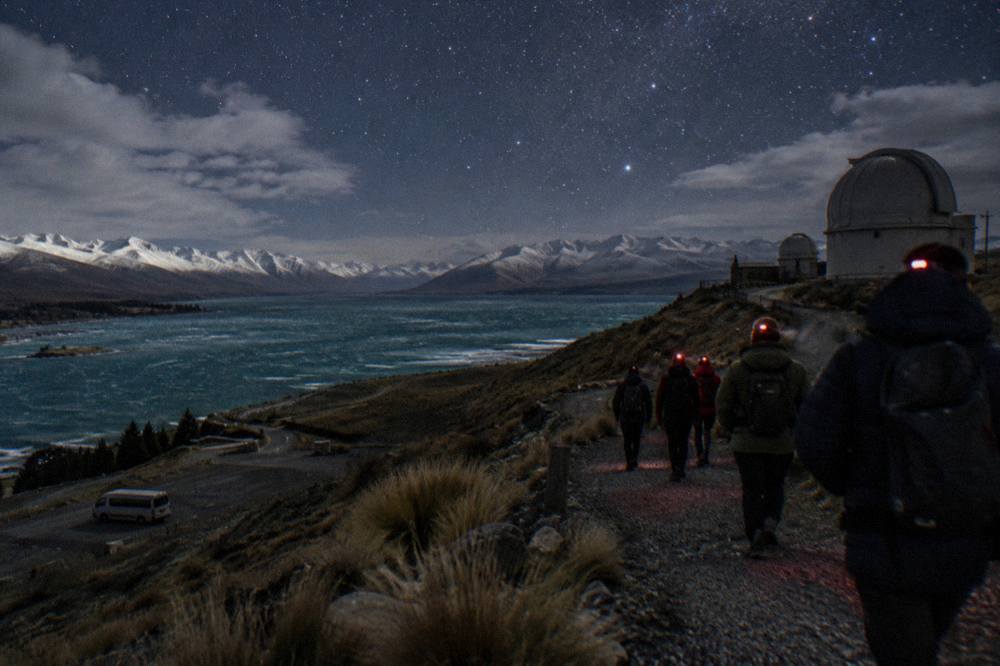
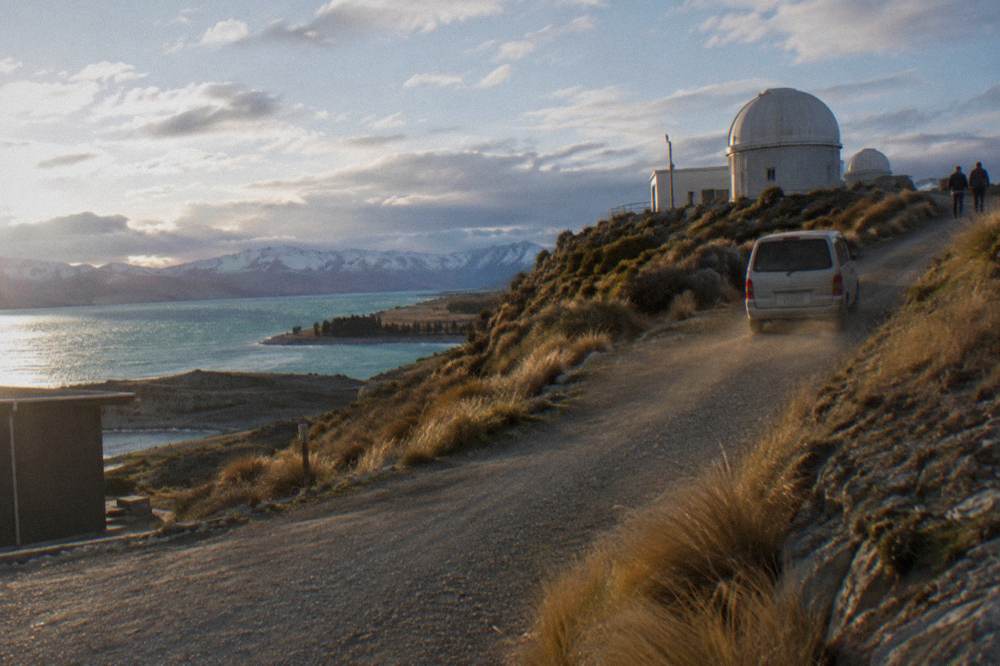
Mount John is a working research observatory, not a purpose-built tourist attraction. The University of Canterbury runs it, and the telescopes on the summit ridge do science on most clear nights, which is why casual visitors cannot simply drive up after sunset. The public road up the mountain, via Godley Peaks Road off State Highway 8, is open in daytime only, and vehicles over 12 seats are not permitted on it in any case. Night access belongs to the Dark Sky Project, whose tours run seven days a week with times that follow sunset, because true darkness at this latitude arrives late in summer: in December and January, real stargazing darkness starts roughly 10 pm, with sunset around 9 pm in December and about 9:20 pm at the solstice on 21 December. Since daytime is the only window for driving up independently, the guide to fitting a Mount John summit walk around a stargazing tour compares road access, entry fees, and the summit cafe.
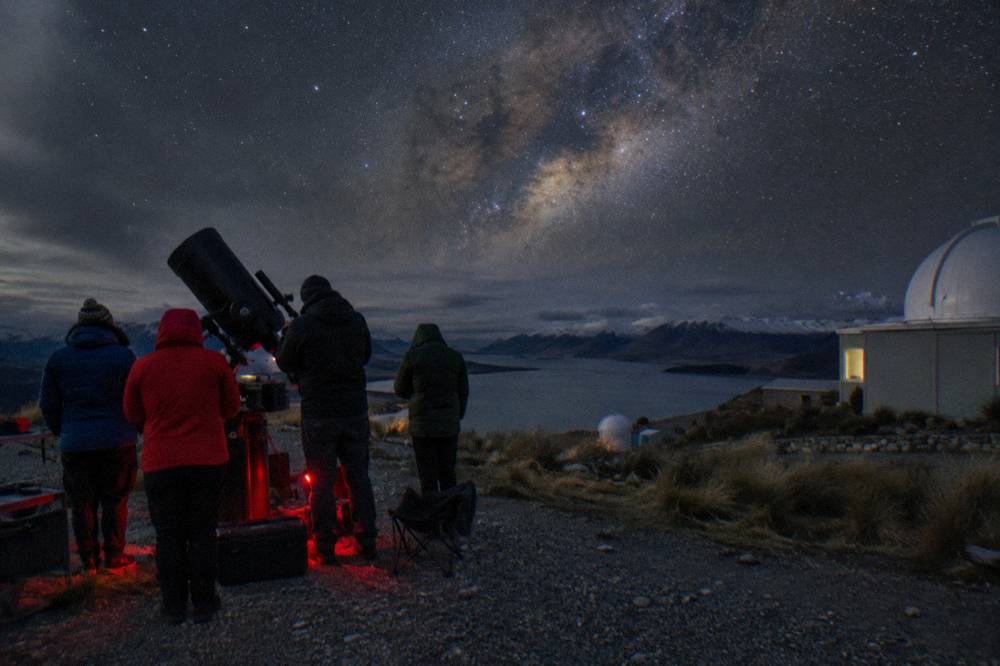
The tour begins at the Dark Sky Project base on the lakefront, where check-in opens 15 minutes before departure. From the base it is about 15 minutes by bus to the summit. Once there, the group moves between an open sky session, where guides point out constellations, and time inside a dome around a 16 inch telescope. The night ends with the bus back down to the village.
Two honest caveats shape expectations. The operator says plainly that it cannot guarantee what you will see; the Milky Way, planets and any aurora depend on weather and moonlight, and no stargazing tour anywhere can promise otherwise. And the experience is not wheelchair accessible, since the summit requires a walk of about 100 m up a gravel incline plus a few steps in the dark, described as needing moderate fitness. Photos are allowed with the flash off.
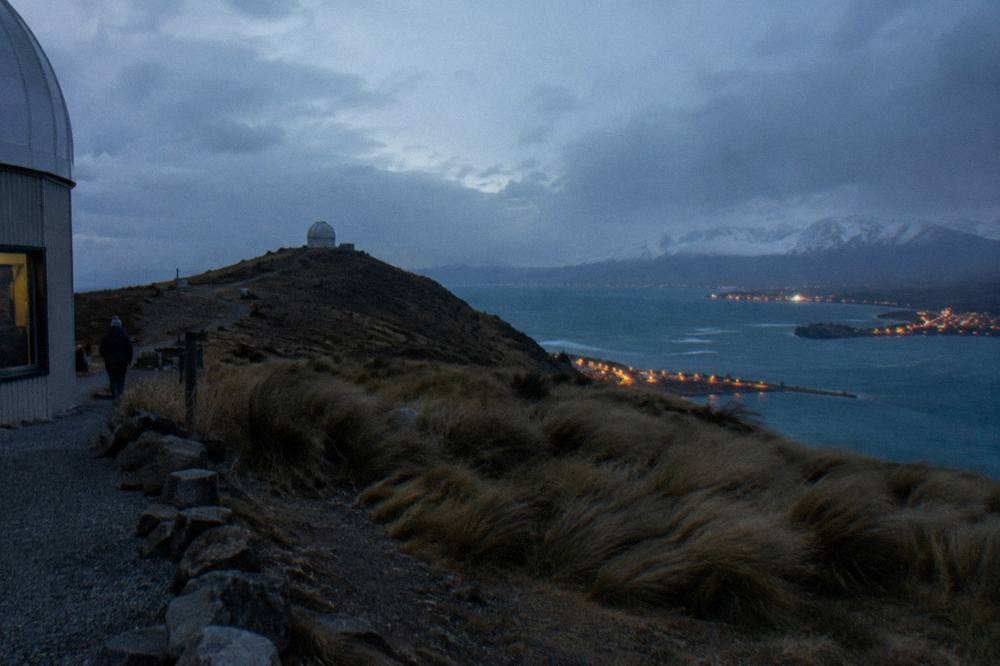
What Does The Mount John Summit Night Actually Include?
The $133.00 from-price buys the 1 hour 45 minute guided experience including the bus both ways, exclusive summit access at 1,029 m, an expert astronomy guide with storytelling, a loaned extreme cold weather jacket, and telescope time around a 16 inch instrument in a dome. Not included are hotel pickup and drop-off, food and drinks, and anything you buy beyond the ticket.
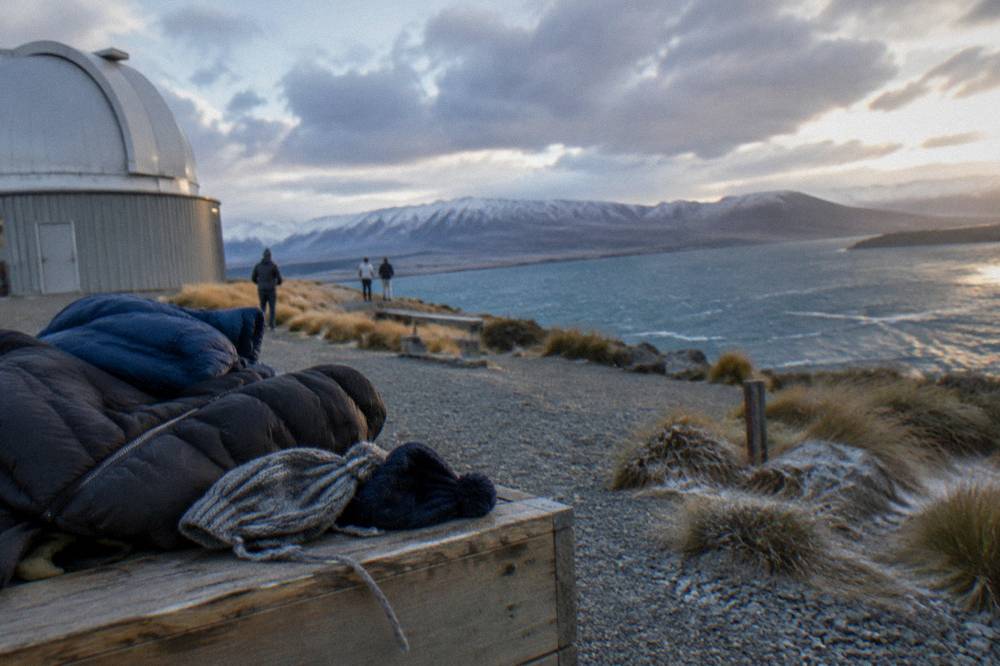
The jacket matters more than visitors expect. Mount John at night is cold even in summer, a fact the operator repeats in its own advice, and the loaned extreme cold weather jackets are serious garments designed for summit conditions rather than fashion. It is one of only two stargazing listings on this site that state a warm jacket is provided, the other being the alpine stargazing night from Silver River, so if you run cold this is a genuine differentiator rather than a marketing line. Everything else about staying warm is on you: closed shoes, layers, a hat, and gloves you can work a phone camera in.
The telescope is the other headline. A 16 inch aperture gathers a lot of light, which means fainter objects, more detail on planets, and a better view of dense star fields when the sky cooperates. Guides tailor what the group looks at to what is actually visible that night, which changes with the season, the moon and the weather. Around new moon the sky is at its darkest and faint objects show best; a full moon washes them out, so the moon phase is worth checking before you pick a date. New moon falls around 9 November 2026, 9 December 2026 and 7 January 2027 if you are planning that far ahead, and those dates are approximate within a day.
The storytelling part of the night is easy to underrate. Guides work the sky from a southern-hemisphere perspective, which for most northern visitors means an entirely unfamiliar ceiling: constellations like the Southern Cross, the two Magellanic Clouds, and the Milky Way's core passing overhead rather than along a low horizon. What you take from the night depends heavily on the guide you draw, and reviews of the operator's nights consistently reward the guides who read the room as well as the sky.
If the summit night is sold out or does not fit your budget, the same operator runs a second product from the same base, and two village stargazing operators run cheaper nights that keep you off the mountain entirely. The three listings below cover those bases: the summit tour itself, the cheapest per-person stargazing tour on this site, and the most reviewed of the village nights.
How Much Does A Mount John Observatory Tour Cost?
The Summit Experience starts at $133.00 per person for the 1 hour 45 minute night, minimum age 10, based on the operator's listed from-price. The same operator's Cowan's Private Observatory night starts at $80.88 per person, the cheapest listed Tekapo stargazing night is $55.00 per person, and the median per-person price across the 24 per-person tours on this site is $199.69.
Within the village's six stargazing listings, the summit tour sits toward the top of the price range, which follows from what is exclusive about it: the road, the summit and the dome. The comparison below uses only listed from-prices and durations.
| Tour | Operator | From (USD) | Duration | Rating | Reviews | Min age |
|---|---|---|---|---|---|---|
| Mount John Summit Stargazing | Dark Sky Project | $133.00 pp | 1 h 45 m | 4.6 | 347 | 10 |
| Cowan's Private Observatory | Dark Sky Project | $80.88 pp | 1 h 30 m | 3.9 | 91 | 5 |
| Alpine Stargazing Experience | Silver River Stargazing | $55.00 pp | 1 h 15 m | 4.6 | 864 | Not stated |
| Stargazing Experience | Chameleon Stargazing | $72.00 pp | 1 h 30 m | 4.9 | 788 | Not stated |
| Ultimate Stargazing Experience | Go Tekapo | $124.24 pp | 2 h | 5.0 | 17 | Not stated |
| Soak in the Stars | Tekapo Star Gazing | $101.55 pp | 1 h 30 m | 4.3 | 121 | 10 |
If the soak-and-stargaze option stands out, the guide to whether the Tekapo hot pools and stargazing tour is worth it compares it against the dry stargazing tours listed above.
All six of those booking pages state free cancellation for a full refund up to 24 hours before the start, which is worth knowing when you are gambling on weather weeks in advance. The fuller price picture across every tour category around the lake, including flights and day trips, is in the guide to Lake Tekapo day tour prices.
A budget note on the wider reserve, not the tour: the Mt John access road is open in daytime with a small road fee per vehicle paid by card at the gate, and the summit has a daytime cafe, so you can visit the mountain in daylight for a fraction of the night price, check the cafe hours. But daytime access gives you the view, not the sky, and the telescope domes are not part of a casual daytime stop in the way the night tour makes them. If the summit experience is the reason you are in Tekapo, check availability early in your planning, because a single road limits how many people the night can carry.
How Do You Get To Mount John Observatory For The Night?
You do not drive yourself. All summit tours meet at the Dark Sky Project base at 1 Motuariki Lane, Lake Tekapo, check in 15 minutes before departure, and take the operator's bus about 15 minutes up to the summit, with the return ride included. Hotel pickup and drop-off are stated as not included, so you make your own way to the village base.
That last point catches people out. Three stargazing listings on this site state plainly that hotel pickup is not part of the product, and both Dark Sky Project nights are among them. Lake Tekapo village is small, a few minutes' walk end to end along the lakefront, so for almost everyone staying in the township the base is closer than a hotel lobby would be. If you are staying out at Tekapo Springs on Lakeside Drive or beyond the highway bridge, budget the walk or drive, and remember winter nights on the lake shore are cold before the tour even starts.
The two Dark Sky Project nights differ in where they take you, and the differences are worth laying side by side before you choose between them.
| Feature | Summit Experience (Mt John) | Crater Experience (Cowan's Observatory) |
|---|---|---|
| From price | $133.00 pp | $80.88 pp |
| Duration | 1 h 45 m | 1 h 30 m |
| Location | Mt John summit, 1,029 m | Cowan's Private Observatory, 5 min from base |
| Transport | Return bus from base, about 15 min | Return transport from Dark Sky base |
| Main telescope | 16 inch in a dome | 14 inch telescopes |
| Minimum age | 10 | 5 |
| Warm jacket | Extreme cold weather jacket loaned | Not stated; dress warmly |
| Group max | Not stated | 22 |
| Rating | 4.6 / 347 reviews | 3.9 / 91 reviews |
For travellers arriving without a car at all, the options are thinner but real, and they are laid out in the guide to getting to Lake Tekapo without a car. Several small-group day tours from Christchurch and Queenstown terminate at the Dark Sky Project base, which is a tidy way to arrive in the village an hour or two before a night tour. The reverse matters too: if you stargaze on Mount John, you will be back in the village late, around or after 10 pm in summer months, so an early breakfast booking the next morning is a nicer plan than a dawn departure.
In daytime the story is different, as covered earlier: the road up Mount John is open to private vehicles for a card-paid fee, the summit cafe runs daytime hours, and the summit circuit walk is open to walkers. Some visitors drive up in the afternoon, then come down for the tour bus later, which pairs the view in daylight with the sky in darkness on the same day.
What Can You Actually See From Mount John At Night?
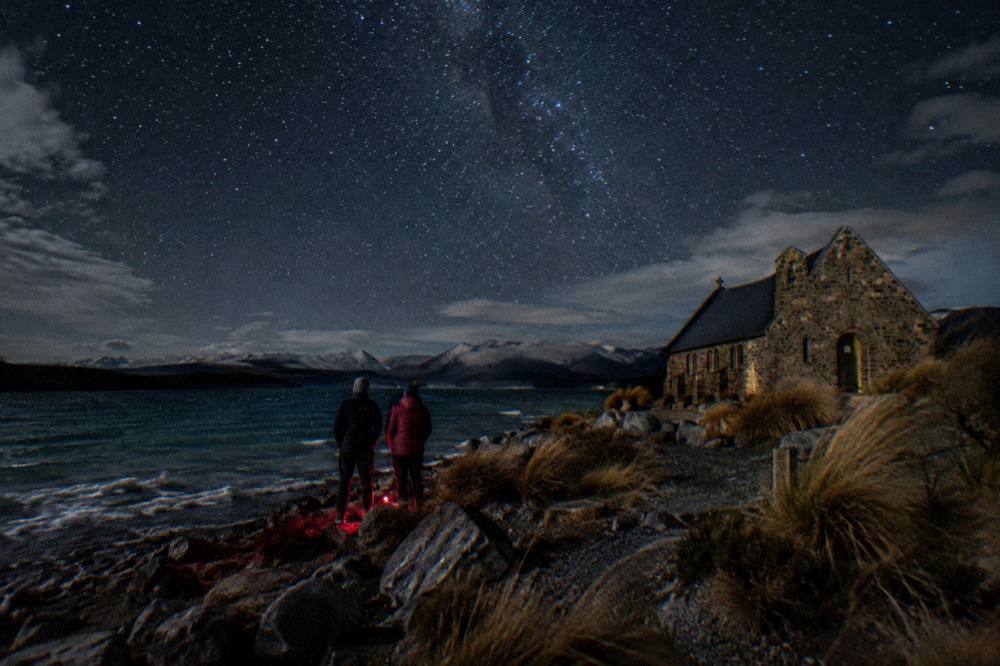
From the summit you can see whatever the night gives: planets, star clusters, nebulae and the Milky Way's core through the 16 inch telescope, and constellations, the Southern Cross and the Magellanic Clouds by eye and laser pointer. The operator states it cannot guarantee any specific sight, since weather and moonlight decide, and around new moon the sky is darkest while a full moon washes out fainter objects.
The southern sky is the drawcard for most visitors from the northern hemisphere. Objects that sit low or invisible from Europe, North America or much of Asia pass high overhead here, and the two Magellanic Clouds, satellite galaxies of the Milky Way visible only from southern latitudes, are a regular feature of Tekapo nights when the sky is clear. The Milky Way itself is not a guaranteed sight on any given night, a question examined in detail in can you see the Milky Way on a Tekapo stargazing tour; the honest answer is that it depends entirely on cloud, moon and season.
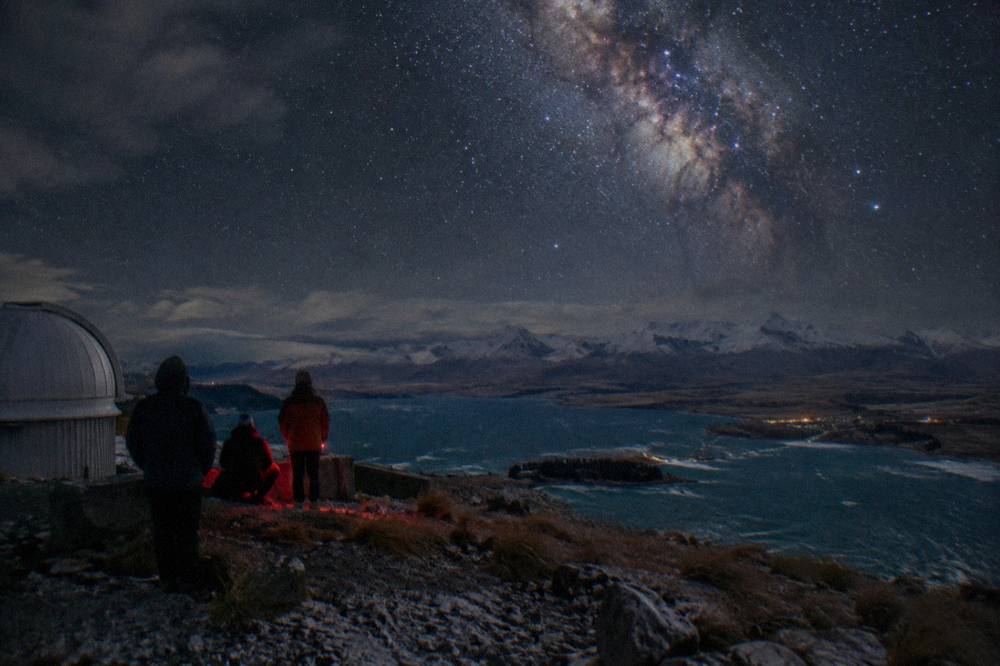
What the summit location adds over the village shoreline is altitude and distance from the few lights that exist. At 1,029 m you are above the thickest layer of ground haze, and the reserve's lighting rules, in force since the early 1980s, keep the village below deliberately dim. The reserve's designation covers 4,367 km2 taking in both the Mackenzie Basin and Aoraki / Mount Cook National Park, per the International Dark-Sky Association's place listing at darksky.org. None of that makes the sky immune to cloud, and the mountain can be socked in while the village below is clear, or the reverse.
The Aurora Australis is the wildcard. It is occasionally visible from the Mackenzie Basin, and it is never promised by any operator, because it depends on solar activity that cannot be forecast reliably more than a short time ahead. If an aurora happens on your night, it is a gift, not an itinerary item.
What Should You Wear On A Mount John Summit Tour?
Wear serious cold-weather clothing regardless of season: closed shoes, warm layers, a hat and gloves, over which the operator loans an extreme cold weather jacket for the summit. Mount John at 1,029 m is cold at night even in summer, and the night includes about 100 m of walking up a gravel incline plus a few steps in the dark, so footwear should handle loose gravel.
The jacket loan is included on the Summit Experience only, and it is worth saying that twice: the same operator's Cowan's Private Observatory night does not state a jacket, and guests there are simply told to dress warmly. The divide between the two Dark Sky Project nights is a common planning question, and it is worth reading the notes on the Dark Sky Project stargazing tour page, which covers both nights from the same base.
Footwear is the detail people regret. The summit move from bus to dome involves a gravel incline and a handful of steps, negotiated in darkness with a group around you. Sandals and thin-soled shoes make that harder than it needs to be, and cold feet will ruin an otherwise good hour at the telescope faster than anything else in the sky. Phone flashlights are asked off and light-up clothing is out, because white light resets everyone's night vision.
For the wider packing question across all the village's night tours, the seasonal advice is collected in what to wear on a Lake Tekapo stargazing tour. The short version for Mount John specifically: dress for a cold hilltop, not a lakeside evening, and let the loaned jacket do the outer layer.
Is The Mount John Tour Suitable For Children?
The Summit Experience carries a minimum age of 10, so younger children cannot take the summit night at all. The operator's other product, the Crater Experience at Cowan's Private Observatory, sets its minimum age at 5, and the hot-pool stargazing night at Tekapo Springs also sets 10, so family plans hinge on which night you choose.
Age limits here are stated by the operators: three stargazing listings do not state a minimum age, Cowan's states 5, and only the Mount John summit and Soak in the Stars nights set it at 10. For the summit, the age of 10 sits alongside the fitness note, the dark walking and the cold, all of which make the night a long one for small children even when they qualify. Families weighing the whole question, including the daytime options that do not state a minimum age, will find the trade-offs set out in the guide to a Lake Tekapo day tour with kids.
Teenagers are a different story, and the summit night is one of the better-aimed products at that age group: the dome, the telescope and the physics of what the guide is pointing at reward curiosity in a way a beach stop does not. The night is also simply shorter than most, at 1 hour 45 minutes, which keeps it inside the attention span of most ten-and-ups.
One practical note for parents booking: photos are allowed on the summit with the flash off, so a phone camera works, but the darkness means shots of the sky itself need more than a phone. The guide's storytelling is the memory that travels home, and children old enough to follow it tend to repeat the Southern Cross finding trick for weeks.
What Happens If The Weather Cancels Your Stargazing Night?
If outdoor stargazing is not possible, the operator offers an alternative night-time indoor experience, or a reschedule subject to availability, a voucher or a refund. The booking terms across all 25 tours on this site state free cancellation for a full refund up to 24 hours before the start, and the operator publishes no separate fixed cancellation window for weather, so never count on an automatic refund on the night.
The indoor alternative is worth understanding before you book, because it is not the same product as the outdoor tour and not a guaranteed sky view. It is a night-time experience under cover, and some travellers love it while others find it a consolation prize; the honest framing is that you exchange the sky for astronomy content in a warm room, and the operator is upfront that what you see outdoors depends on conditions. The full picture, including how each village operator handles a cloudy night differently, is laid out in what happens if a Tekapo stargazing tour is cancelled for cloud.
The contrast with the hot-pool night is instructive. The Soak in the Stars product at Tekapo Springs runs even if some or none of the sky is visible, swapping to an indoor session, with a 25% refund applying when under 30 minutes of telescope viewing happens on the night, per its own terms. The Mount John summit night instead leans on the reschedule-or-refund model, because there is no pool to fall back on at 1,029 m. Neither approach is better in the abstract; they suit different kinds of travellers, and the deeper comparison lives on the page about Lake Tekapo stargazing versus the hot pools night. For the pool-side version of the evening, the guide to the Tekapo Springs hot pools and stargazing combo spells out pricing, the cloudy-sky fallback, and how the night compares with other Lake Tekapo options.
Practical advice for maximising your odds: book the summit night early in your Tekapo stay, not on your last evening, so a reschedule has room to land. Winter nights are longer and darker, which the sky appreciates, though snow is possible from June to August and the mountain road can close in poor weather. Summer gives warmer toes but a sky that does not fully darken until around 10 pm in December and January.
The stargazing-specific weather patterns, and what they mean for picking a date, are covered season by season in the guide to Lake Tekapo stargazing weather and cancellations. Road conditions on State Highway 8, relevant if you are driving in from elsewhere that day, are best checked on the day through the official NZTA Journey Planner.
Mount John Summit Tour Vs The Other Lake Tekapo Stargazing Tours
The summit night is the only one of Tekapo's six stargazing listings that goes up Mount John to a working observatory, from $133.00 per person, 4.6 across 347 reviews. The most reviewed village night is the Silver River alpine experience at 4.6 across 864 reviews from $55.00, and the highest rated with more than 100 reviews is Chameleon's at 4.9 across 788 from $72.00, both of which stay at lower sites around the township.
Three differences do the deciding. Location: Mount John's summit is exclusive to the one tour, while the others use lakeside and backcountry sites, with Silver River's group capped at 10 and transported from its check-in office at 12 Rapuwai Lane to a dark site. Instruments: the summit's 16 inch dome telescope against 14 inch telescopes at Silver River and a 9.25 inch smart telescope at Chameleon, which also throws in hot chocolate, marshmallows, fire bowls and edited photos of your group under the stars. Comfort and extras: the summit loans the serious jacket; Chameleon supplies blankets, mattresses and outdoor seats; and the hot-pool night wraps the sky session around a soak, which no telescope can match.
The Chameleon night is the sociable, cushioned version of stargazing, an hour and a half from $72.00, meeting at 70 Andrew Don Drive a four-minute drive from the village centre, with no transport listed from hotels.
The Silver River night is the value play at $55.00 per person, the cheapest stargazing listing on this site, 1 hour 15 minutes, with round-trip transport from the check-in office to its stargazing site included and a warm down jacket among the stated inclusions.
Review pools deserve their caveat printed beside them. The Go Tekapo Ultimate night shows 5.0, but across only 17 reviews, a pool too small to treat as a verdict, while the 4.6 across 347 on the summit tour and 4.9 across 788 at Chameleon rest on much broader evidence. The general question of whether any of these nights earn their price is argued honestly in is a Tekapo stargazing tour worth it.
| Decision factor | Mount John Summit | Alpine Stargazing | Chameleon Stargazing |
|---|---|---|---|
| From price | $133.00 pp | $55.00 pp | $72.00 pp |
| Duration | 1 h 45 m | 1 h 15 m | 1 h 30 m |
| Rating | 4.6 / 347 reviews | 4.6 / 864 reviews | 4.9 / 788 reviews |
| Group max | Not stated | 10 | Not stated |
| Min age | 10 | Not stated | Not stated |
| Warm jacket | loaned | provided | Not stated |
| Main telescope | 16 inch in a dome | 14 inch | 9.25 inch + smart telescope |
| Getting there | bus from 1 Motuariki Lane, included | transport from check-in office included | meet at 70 Andrew Don Drive |
How Do You Book A Mount John Observatory Stargazing Tour?
Book through the booking page: check the date, select the night, and confirm, with check-in 15 minutes before departure at 1 Motuariki Lane. The booking terms state free cancellation for a full refund up to 24 hours before the start, minimum age 10 applies, and same-day booking is sometimes possible though spots are limited.
Timing advice is the same for every night tour in the village: book ahead, and book early in your stay. The summit night is constrained by a single road and a limited vehicle, so it is the listing most likely to be full when you arrive in peak season, which around Tekapo means the summer months and the late-November-to-early-January lupin window, when the village swells with photographers and the bloom draws crowds to the river flats. For that combined season plan, the Lake Tekapo lupin season day tours guide covers how the two itineraries stack up, daylight flowers and dark skies being an unusually good pair.
If your date is flexible, lean toward a night near a new moon, when the sky is darkest: new moon falls around 9 December 2026 and 7 January 2027, approximate within a day. If your group is not, book anyway and hold the free-cancellation window in mind; the terms across these listings allow a full refund up to 24 hours before the start, which covers a change of plan but not a same-evening cold feet moment.
Budget travellers can split the difference another way: many people take a cheaper village night and drive the Mount John road in daytime for the fee, catching the lake view and the summit cafe. That route gives you the mountain but not the dome, and if the dome is the point, the summit tour is the only door to it.
Common Questions About Mount John Observatory Stargazing Tours
What Is The Mount John Observatory Stargazing Tour?
It is the Dark Sky Project's Summit Experience: a guided 1 hour 45 minute night from $133.00 per person that buses you from the base at 1 Motuariki Lane to the summit of Mount John, 1,029 m above Lake Tekapo, for stargazing with an astronomy guide and a 16 inch telescope in a dome, with a cold-weather jacket loaned. Minimum age is 10.
Can You Visit Mount John Observatory At Night Without A Tour?
No. The public access road up Mount John is open in daytime only, with a small per-vehicle road fee paid by card at the gate, and after dark the summit is reached only on the operator's tour bus. Daytime visitors can drive up for the view and the summit cafe, check the hours, but the telescopes at night belong to the tour and to the observatory's own research.
Is The Mount John Summit Tour Worth The Extra Cost?
It depends on what you want. At $133.00 per person it is the most expensive stargazing night in the village, and the premium buys the exclusive summit access, the dome telescope and the serious jacket. If you mainly want a guided look at the southern sky, the $55.00 alpine night or the $72.00 Chameleon night deliver that for less, at 4.6 across 864 reviews and 4.9 across 788 reviews respectively.
How Cold Does The Mount John Summit Get At Night?
Cold enough that the operator loans extreme cold weather jackets as part of the ticket, and cold at night even in summer, per the operator's own advice. Bring closed shoes, warm layers, a hat and gloves. The night includes about 100 m of walking up a gravel incline and a few steps in the dark, so dress for a hilltop rather than a village evening.
What Happens If It Is Cloudy On The Night Of The Tour?
The operator offers an alternative night-time indoor experience, a reschedule subject to availability, a voucher or a refund when outdoor stargazing is not possible. The indoor alternative is not a guaranteed sky view. The booking terms state free cancellation for a full refund up to 24 hours before the start.
Can Children Go On The Mount John Stargazing Tour?
Children aged 10 and over can take the summit night; the minimum age is stated as 10. Younger children cannot. The same operator's Crater Experience at Cowan's Private Observatory states a minimum age of 5, which makes it the family option within the Dark Sky Project's two nights.