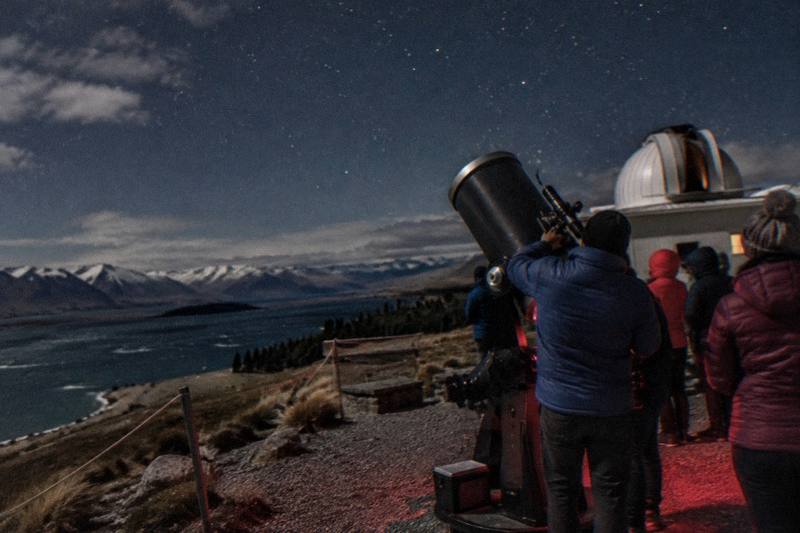
Is A Stargazing Tour At Lake Tekapo Worth Paying For When Stargazing Is Free?
The sky over Lake Tekapo is free to look at, but a paid stargazing tour adds telescopes, a guide and warmth. Here is how the free option and the tours compare.
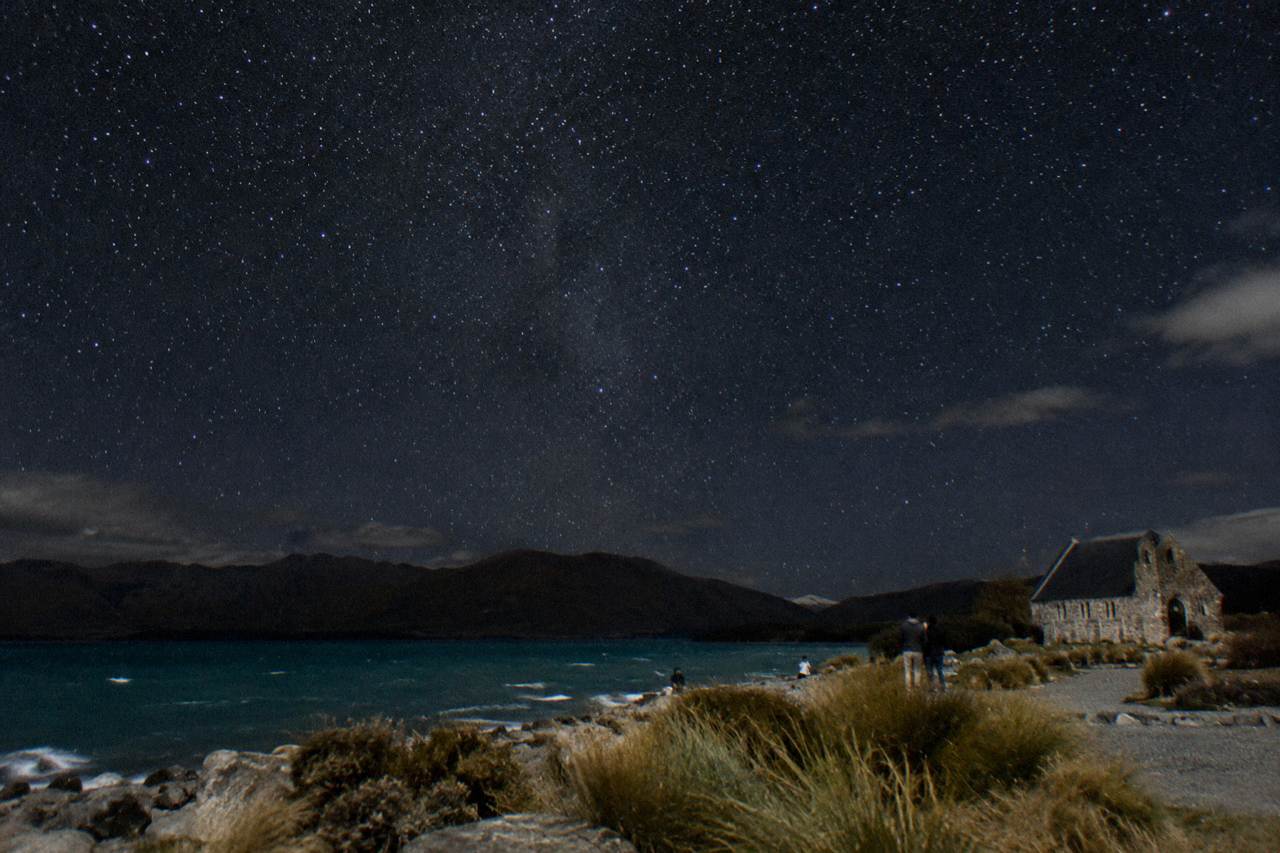
For most travellers, yes, if you want more than a glance upward: a paid Tekapo stargazing tour adds a guide who can find objects, large telescopes that show detail your eyes and phone never will, transport away from village lights, and warmth. If you are happy standing beside the lake on a cold night looking at a beautiful sky with no explanation, the free option is genuinely good. If you are also filling your daylight hours, the guide to free sights around Lake Tekapo village shows how the lakefront stops fit around a paid day tour.
That is the honest answer, and it is worth unpacking carefully because the two experiences are not really competitors. Lake Tekapo sits inside the Aoraki Mackenzie reserve, designated in 2012 as an International Dark Sky Reserve, covering 4,367 square kilometres of Aoraki / Mount Cook National Park and the Mackenzie Basin. Outdoor lighting controls in the basin date from the early 1980s, put in place to protect Mt John Observatory. The practical effect is simple: the sky above the lake is dark enough that on a clear, moonless night you can see an enormous amount with no equipment at all, standing on a public lakeshore, for free. That free access raises an obvious question, and the verdict on whether a Tekapo stargazing tour is worth the price lays out what guided tours actually add, from telescope time to expert commentary, and who they best suit.
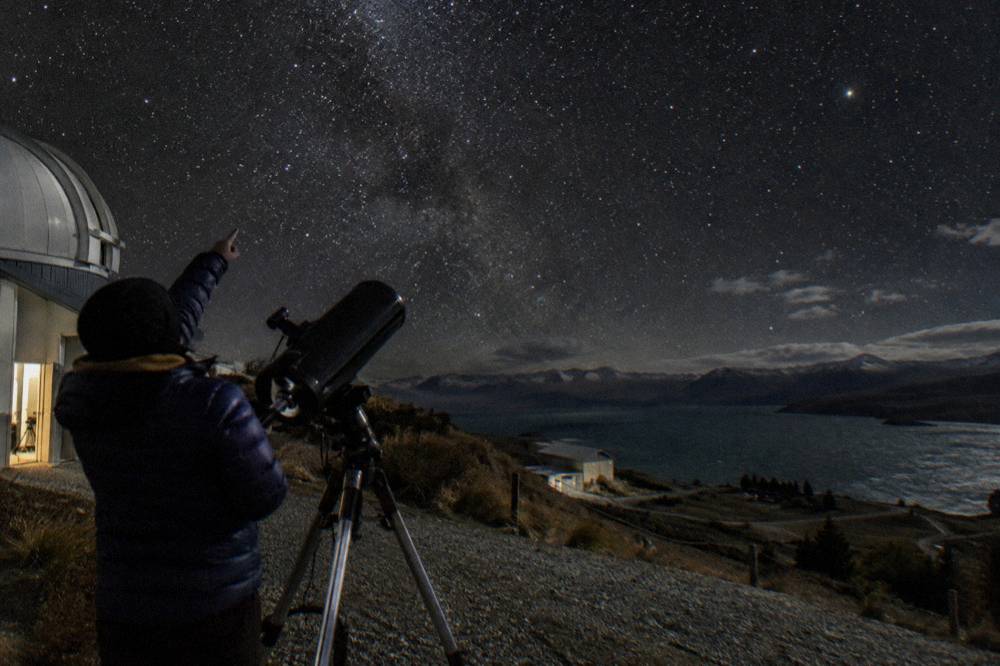
So the free option is real, and anyone who tells you the sky is locked behind a ticket is wrong. What you are paying for on a tour is not access to the sky. You are paying for interpretation, for aperture, and for comfort. A 14 or 16 inch telescope shows planets, star clusters and galaxies in a way no naked-eye session can, and a guide with a handheld laser or a lifetime of local knowledge turns a scatter of points into stories. On a winter night at 710 metres above sea level, warmth matters more than most visitors expect before they arrive.
The cheapest guided option is the Lake Tekapo: Alpine Stargazing Experience with a Guide from Silver River Stargazing, from $55.00 per person for 1 hour 15 minutes, rated 4.6 across 864 reviews, which also makes it the most reviewed tour covered on this site. At that price the decision is less "can I afford a tour" and more "do I want one at all". This article walks through both sides so you can decide before you commit.
Where Can You Stargaze Around Lake Tekapo Without Paying?
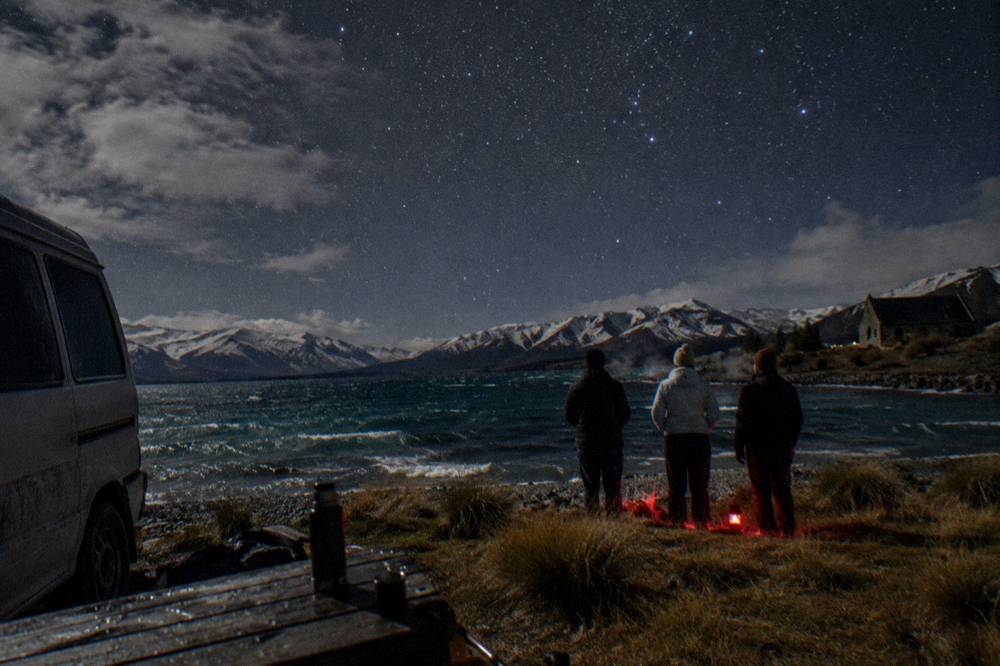
Anywhere with an open view of the sky and no bright lights in your face works: the public lakefront, the footbridge area, or a spot well off the road, with care. No viewpoint charges entry, and no permit is needed to look up. Walk a few minutes from the township lights and the sky darkens quickly, which is the entire trick to free stargazing here.
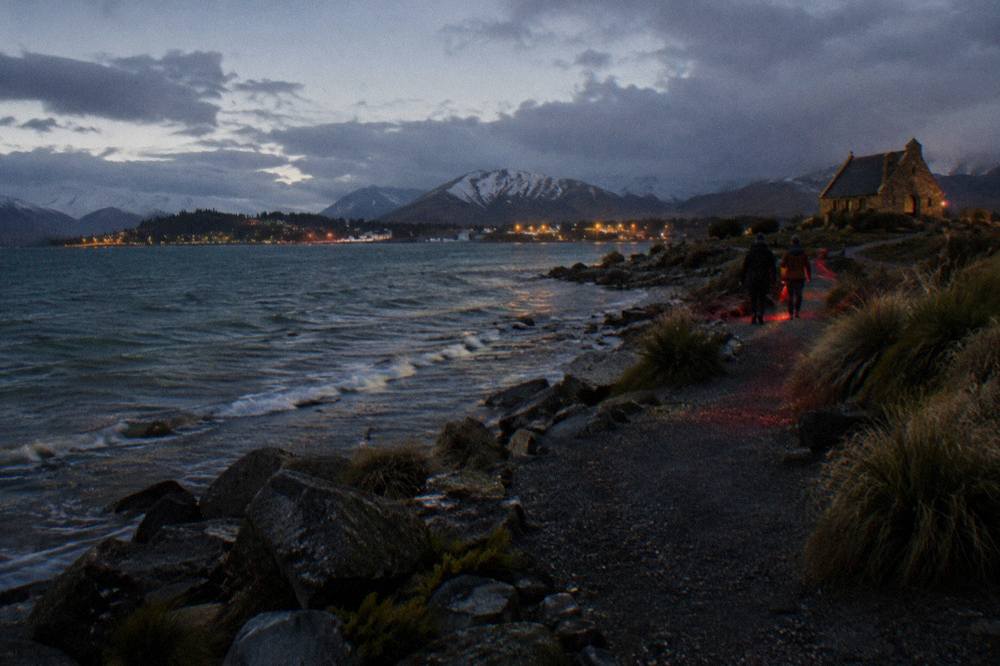
The village itself is small, and light discipline is enforced: the lighting controls that protect the observatory mean fixtures are shielded and glare is limited, so the transition from lit streets to dark shoreline is unusually fast. Walk away from the buildings, let your eyes adjust for ten to fifteen minutes without checking a phone, and the stars do the rest. On a clear night around new moon, free stargazing at Tekapo can beat paid stargazing almost anywhere else in the country.
There are practical cautions. The Church of the Good Shepherd grounds close at 8 pm in summer and 5 pm in winter: there is no night access inside the fenced area, so do not plan a night shoot there. Drones are banned around the church and anywhere in the village. Nights are cold even in summer, and snow is possible from June to August, so dress for a freezer, not an evening. In December and January, true darkness arrives roughly 10 pm because sunset runs to around 9 pm or later, so a "quick look after dinner" in midsummer may not see proper darkness at all.
The one thing free stargazing cannot give you is a plan. A guide knows what is visible that night, where the moon is in its cycle, and which objects are worth the cold. Standing alone on the shore, you get the beauty but not the explanation, and faint objects like galaxies stay invisible without optical help. The guide to planning a Tekapo stargazing night covers the moon and season side of that equation in detail.
What Does A Paid Lake Tekapo Stargazing Tour Actually Add?
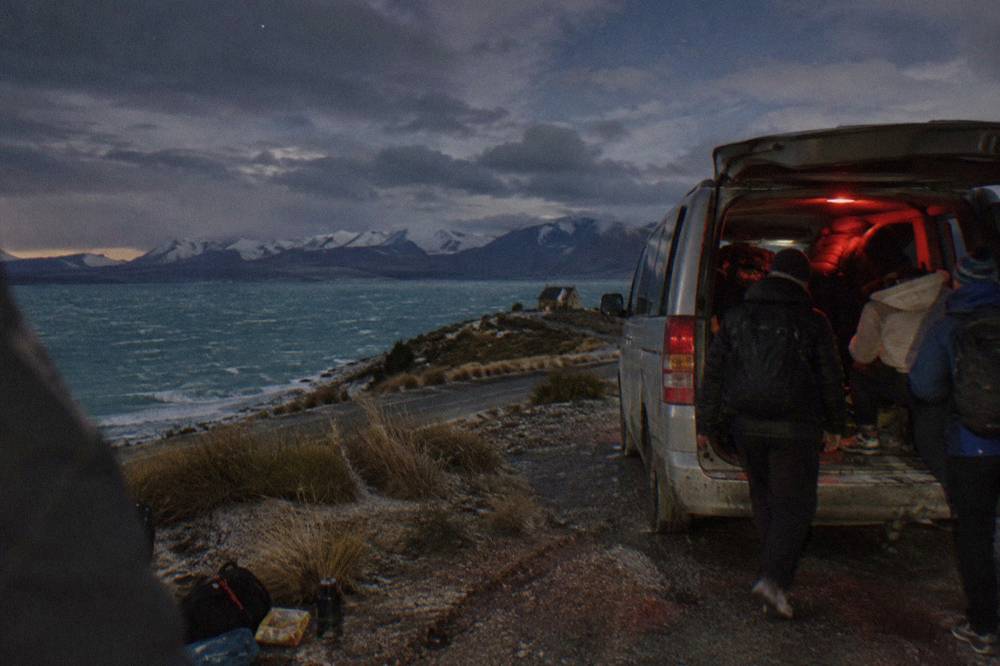
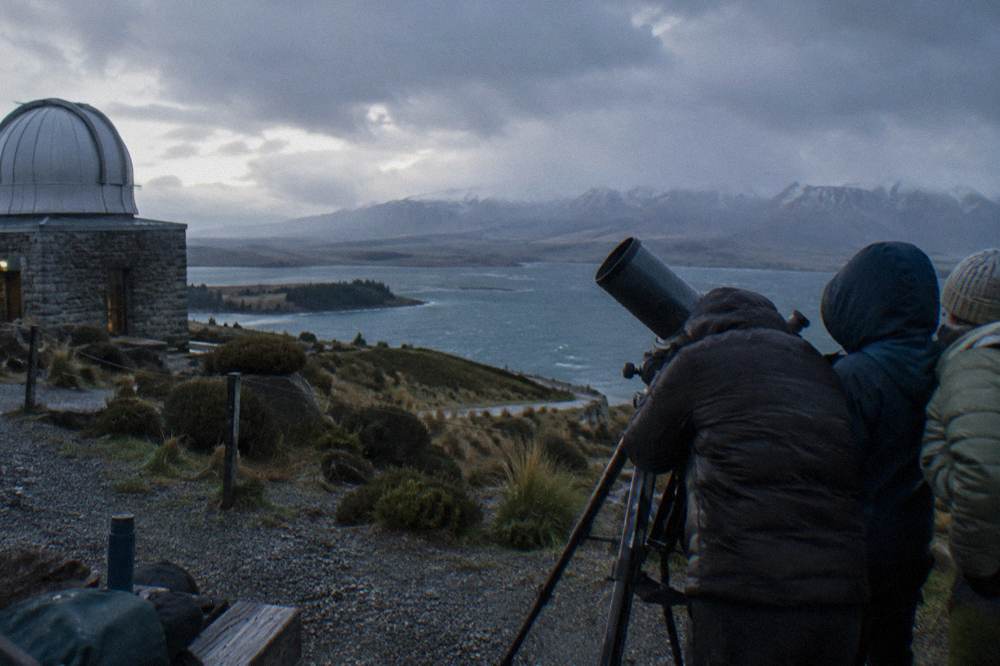
A paid tour adds four things the free shore cannot: large telescopes that resolve planets and deep-sky objects, an astronomy guide who narrates the sky, transport to a darker site away from the village, and warmth, with two operators providing jackets. Four tours state caps of 10 to 34 travellers depending on the product.
The telescope point deserves emphasis because it is the real dividing line. Your eyes at Tekapo will show you thousands of stars, the Milky Way band on a dark night, and perhaps a planet as a bright point. A 14 or 16 inch telescope shows structure: the rings of Saturn, the bands of Jupiter, globular clusters resolving into individual stars, and galaxies as glowing smudges of billions of suns. The difference is not incremental. It is the difference between seeing a light in the sky and seeing a world.
Guides matter just as much. The operators here employ astronomy guides who tailor the session to what is actually visible that night, and who can answer the questions a plaque or an app cannot. The Dark Sky Project says plainly that it cannot guarantee what you will see, since the Milky Way and any aurora depend on weather and moonlight, and every honest operator in the village says the same. What a guide guarantees is not the sky but the reading of it.
The Lake Tekapo: Alpine Stargazing Experience with a Guide from Silver River Stargazing is the clearest example of value at the entry level: from $55.00 per person, 1 hour 15 minutes, warm down jackets provided, use of 14 inch modern telescopes, roundtrip transport from the check-in office at 12 Rapuwai Lane to the stargazing site, and a group capped at 10. At 4.6 across 864 reviews it is the most reviewed stargazing product in the village, and it is the cheapest per-person tour here.
At the comfort end, the Lake Tekapo: Mount John Summit Stargazing Experience from the Dark Sky Project, from $133.00 per person for 1 hour 45 minutes, includes return transport between the base at 1 Motuariki Lane and the summit at 1,029 metres, exclusive summit access, a 16 inch telescope in a dome, an expert guide, and an extreme cold weather jacket loaned for the night. It is rated 4.6 across 347 reviews, with a minimum age of 10 and a moderate fitness requirement: about 100 metres up a gravel incline plus a few steps in the dark. Both Dark Sky Project stargazing products state that hotel pickup is not included, so you make your own way to the base.
How Much Do Lake Tekapo Stargazing Tours Cost?
Guided stargazing at Tekapo runs from $55.00 to $133.00 per person across the six listed stargazing tours, all with a stated from-price per person and durations between 1 hour 15 minutes and 2 hours. Each of the 25 tours covered by this site offers free cancellation with a full refund up to 24 hours before the start.
The table below shows the six stargazing products side by side, with prices, durations and the review pools behind each rating. Review counts matter here more than star ratings alone: a 5.0 from 17 reviews is a good tour with a short history, while a 4.6 from 864 reviews is a proven product built on a large body of nightly feedback.
| Tour | Operator | From (per person) | Duration | Rating | Group max |
|---|---|---|---|---|---|
| Alpine Stargazing Experience with a Guide | Silver River Stargazing | $55.00 | 1 hr 15 min | 4.6 from 864 reviews | 10 |
| Stargazing Experience | Chameleon Stargazing | $72.00 | 1 hr 30 min | 4.9 from 788 reviews | Not stated |
| Stargazing at Cowan's Private Observatory | Dark Sky Project | $80.88 | 1 hr 30 min | 3.9 from 91 reviews | 22 |
| Soak in the Stars (hot pools) | Tekapo Star Gazing | $101.55 | 1 hr 30 min | 4.3 from 121 reviews | 34 |
| Ultimate Stargazing Experience | Go Tekapo | $124.24 | 2 hrs | 5.0 from 17 reviews | 10 |
| Mount John Summit Stargazing | Dark Sky Project | $133.00 | 1 hr 45 min | 4.6 from 347 reviews | Not stated |
For a closer look at the hot pools entry in that table, the guide to the Tekapo Soak in the Stars hot pools tour covers what the price includes, the cloud policy, and how it stacks up against the dry stargazing options.
A few notes the table cannot carry. The Chameleon Stargazing experience, 4.9 across 788 reviews, is the highest rated tour on this site with more than 100 reviews, and it includes hot chocolate with marshmallows, blankets, outdoor seating and edited photos, meeting at 70 Andrew Don Drive, a four-minute drive from the village centre; hotel pickup is stated as not included. The Silver River tour is the only one of the six that both provides warm jackets and holds the lowest price. The Tekapo Star Gazing hot-pool product mixes stargazing with a soak, with hot pool use part of the ticket and a minimum age of 10; it runs even when the sky is cloudy, with an indoor session instead, and a 25% refund applies when under 30 minutes of telescope viewing happens. The Cowan's observatory session has the lowest rating of the six at 3.9 from 91 reviews but also the youngest minimum age, 5, and the loosest cap at 22.
Cost, then, is not really the barrier people imagine. The gap between free and the cheapest telescope tour is $55.00, and even the top of the stargazing range, the $133.00 summit product, costs less than many travellers spend on a single dinner and a tour elsewhere in New Zealand. The honest framing is that Tekapo stargazing is cheap by the standards of paid astronomy experiences, and the decision hinges on interest, not budget. The comparison of every Tekapo stargazing option puts these products in the wider context here.
When Does Free Stargazing Beat A Paid Tour At Lake Tekapo?
Free stargazing is the better choice when the sky is the destination rather than the detail: for photographers chasing the Milky Way over the lake, for travellers on a tight budget, for families with children under the minimum ages, and for anyone who already knows the southern sky. A tour wins when you want to understand what you are seeing or see it magnified.
The moon decides more than money does. Around new moon the sky is at its darkest and a full moon washes out faint objects entirely, tour or no tour. New moon falls around 9 November 2026, 9 December 2026, 7 January 2027, 6 February 2027 and 8 March 2027; full moon around 24 November 2026, 24 December 2026, 22 January 2027, 21 February 2027 and 22 March 2027. On a full-moon night a paid telescope tour can still show you planets and bright clusters, but the free shore and the $133 summit tour are looking at the same washed-out sky. Checking the moon phase before you book anything, free or paid, is the single highest-value minute of planning available.
Seasons matter too. Winter nights are long and dark from early evening, but cold enough that standing still for 90 minutes is a genuine physical test; tours mitigate this with jackets on two products and transport on several. Summer nights start late, with darkness only around 10 pm in December and January, which suits photographers who want twilight colour first but punishes families with tired children. Note the minimum ages before assuming a tour fits your family: the Mount John Summit experience is 10 and up, the Tekapo Star Gazing hot-pool product is 10 and up, and the Cowan's observatory session is 5 and up. The other stargazing tours do not state a minimum age.
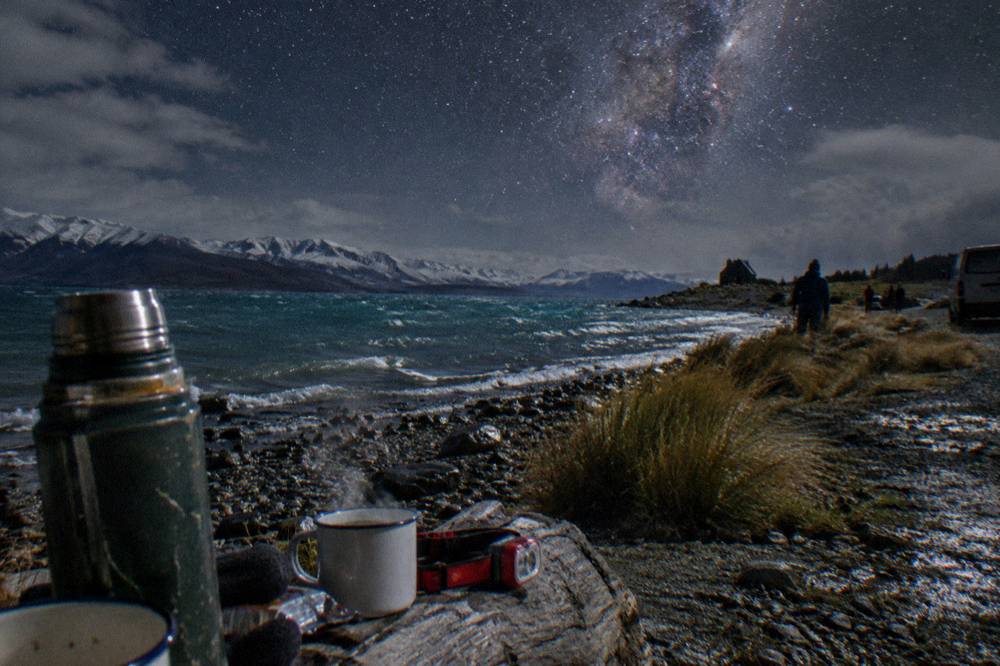
Photographers are the group for whom free usually wins. A guided tour moves at the group's pace, uses red-light discipline and telescopes aimed at specific targets, and is a poor platform for a long-exposure shoot. Standing on the public lakefront with your own tripod costs nothing and answers to nobody. Just keep the rules in mind: no drones anywhere in the village, the church grounds close at 8 pm in summer and 5 pm in winter with no night access, and respect the lighting controls by not adding your own white headlamp to the darkness the village works to protect.
Should You Book A Lake Tekapo Stargazing Tour Or Just Look Up For Free?
Book a tour if this is your one night in the Mackenzie, if you have never looked through a large telescope, or if you are travelling with people who will not stand in the cold unaided. Stargaze free if the sky is a backdrop to your evening, if you are a photographer, or if the budget is spent. Doing both, one night free and one with a guide, is the best answer of all.
The reason the "both" answer works is the price floor. At $55.00 for the Silver River session, a guided night is the cheapest tour price around Tekapo, and it delivers something no restaurant meal can. Spending two nights at Tekapo gives a useful buffer against cloud, because a single cloudy night can defeat the entire purpose of the visit, and the Dark Sky Project runs weather-dependent sessions: when outdoor stargazing is not possible it offers an indoor alternative night-time experience, a reschedule subject to availability, a voucher or a refund, and the indoor alternative is not a guaranteed sky view. Spreading your nights, one paid and one free, hedges the weather without doubling the cost. Before you commit to a night, the guide to Lake Tekapo stargazing weather, refunds and reschedules explains how to read the forecast and what each tour operator does when cloud settles over the lake.
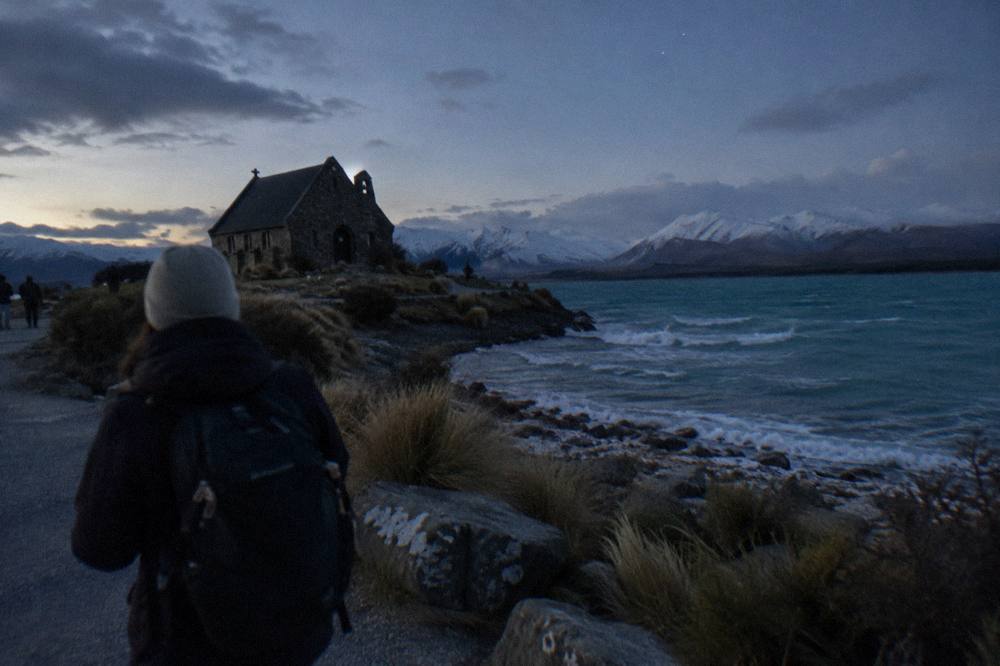
There is also a middle case worth naming: people who think they are not interested in astronomy. Standing on a cold shore looking at pretty stars satisfies some visitors completely and leaves others flat, and it is hard to know in advance which kind you are. A guide with a laser and a telescope can help the second kind, because understanding is what was missing, not brightness. If you have ever wondered what a galaxy actually looks like, that is the $55 question, and only a tour answers it.
Whatever you choose, book or plan around the moon, check the road and weather on the day through the NZTA Journey Planner if you are driving in, and trust the reserve itself: it was designated by DarkSky International in 2012. The Aoraki / Mount Cook National Park and Mackenzie Basin area it protects is described by the Department of Conservation as a 4.5 hour drive from Christchurch, which is why so many visitors arrive on day tours and stay for the night sky. More on that trade-off sits in the guide to whether a Lake Tekapo day tour is worth it.
The dark sky is free. The interpretation, the aperture, the warmth and the summit access are what the tours sell, and at Tekapo's prices, they sell them honestly. Lake Tekapo Day Tours lays out every day tour and stargazing product with its from-price and review count, so you can weigh both sides with real numbers rather than brochure language.
Common Questions About Stargazing At Lake Tekapo
Is A Stargazing Tour At Lake Tekapo Worth Paying For When Stargazing Is Free?
For most first-time visitors, yes. The free sky is genuinely spectacular, but a tour adds large telescopes that show planets and galaxies in detail, an astronomy guide, transport to a darker site and warmth, starting from $55.00 per person. Photographers and travellers on tight budgets can happily stay free.
Can You See The Milky Way From Lake Tekapo Without A Tour?
You may, weather and moonlight permitting. The Aoraki Mackenzie International Dark Sky Reserve has had outdoor lighting controls since the early 1980s, and on a clear night around new moon the Milky Way band can be visible from the public lakefront with no equipment and no ticket.
What Is The Cheapest Stargazing Tour At Lake Tekapo?
The Alpine Stargazing Experience with a Guide from Silver River Stargazing, from $55.00 per person for 1 hour 15 minutes, rated 4.6 across 864 reviews. It includes warm down jackets, use of 14 inch modern telescopes and transport from the check-in office to the stargazing site.
What Happens If A Stargazing Tour Is Cancelled For Cloud?
It depends on the operator. The Dark Sky Project offers an indoor alternative night-time experience, a reschedule subject to availability, a voucher or a refund; the Tekapo Star Gazing hot-pool tour runs with an indoor session when the sky is cloudy and gives a 25% refund when under 30 minutes of telescope viewing happens. All 25 tours here state free cancellation for a full refund up to 24 hours before the start.
Is There A Minimum Age For Lake Tekapo Stargazing Tours?
On three products, yes: the Mount John Summit experience is 10 and up, the Tekapo Star Gazing hot-pool tour is 10 and up, and the Cowan's Private Observatory session is 5 and up. The other stargazing tours do not state a minimum age. Free lakeshore stargazing has no age limit at all, which makes it the default for families with very young children.