Milky Way And Moon Phase On A Lake Tekapo Stargazing Tour
The Milky Way at Lake Tekapo depends on three things you can plan around: the moon, the season and the weather. Here is how each one works, and how the stargazing tours differ in price, telescope size and what they can promise.
Short answer
Lake Tekapo sits inside the Aoraki Mackenzie Dark Sky Reserve, designated in 2012, so its night skies are protected by outdoor lighting controls dating from the early 1980s. Whether you see the Milky Way depends on weather and moonlight, never a guarantee. Around new moon the sky is darkest; stargazing tours run from $55.00 per person.
Can You See The Milky Way On A Lake Tekapo Stargazing Tour?
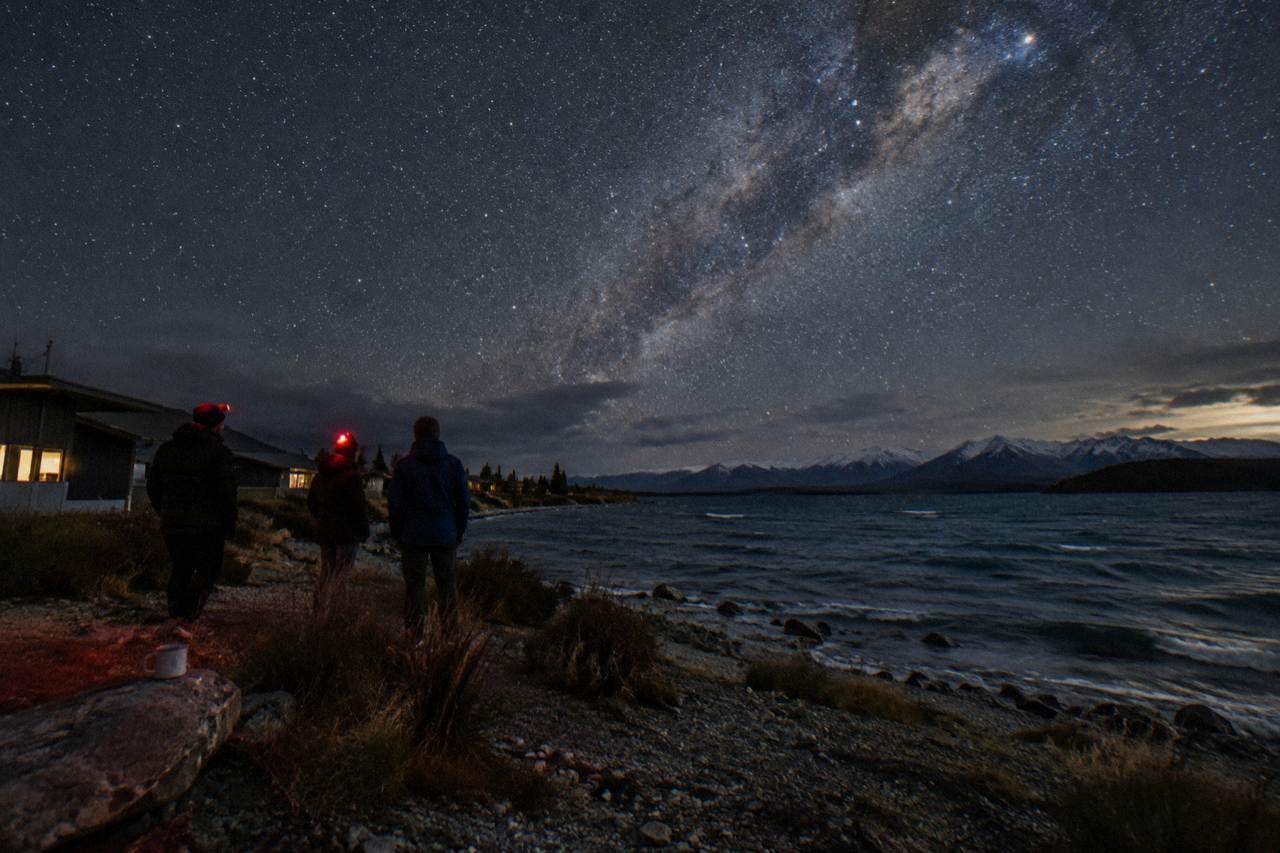
Yes, the Milky Way can be visible from Lake Tekapo, but no tour can promise it. The township sits inside the Aoraki Mackenzie Dark Sky Reserve, designated in 2012, covering 4,367 square kilometres of Aoraki / Mount Cook National Park and the Mackenzie Basin. What you actually see on any given night depends on weather and moonlight, and the operators themselves say they cannot guarantee the view.
That combination of protection and honesty is the whole story of stargazing at Tekapo. The reserve status is real and unusual: outdoor lighting controls here date from the early 1980s, originally put in place to protect the University of Canterbury's Mt John Observatory above the village. Decades of shielded streetlights and low-glare building lighting mean the natural darkness over the basin has been actively defended rather than accidentally preserved. The International Dark-Sky Association's reserve listing records the designation and the area it covers.
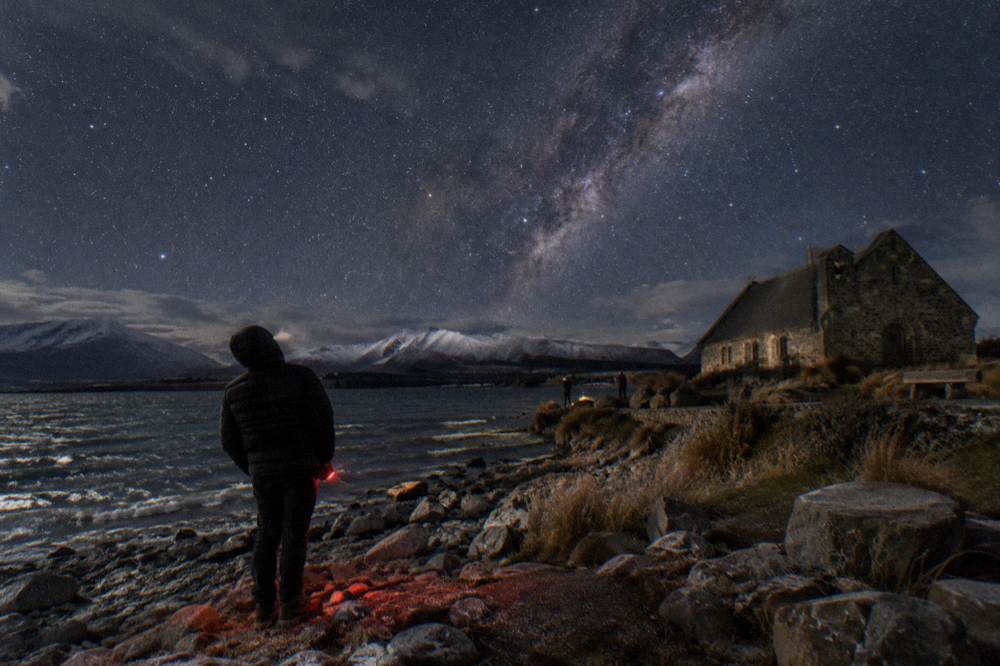
But reserve status controls artificial light, not the sky. Cloud, haze and a bright moon all reduce what any telescope or naked eye can pick up, and the Dark Sky Project says so on its booking page. The Milky Way's dense core is a southern-sky object, and New Zealand's latitude gives it a high, bright passage through the night sky for much of the year, which is one reason the Mackenzie Basin draws astronomers at all. When the conditions line up, the band of the galaxy is visible from the lakefront without any equipment. When they do not, no ticket changes that.
So the planning question is not whether Tekapo is a good place for the Milky Way, it is when to put yourself there and which tour format suits you. The rest of this guide works through the moon calendar, the seasons, the tour options and what happens when cloud rolls in, because those are the levers you actually control. The blog post can you see the Milky Way on a Tekapo stargazing tour covers the bare-visibility question in more depth if that is your starting point.
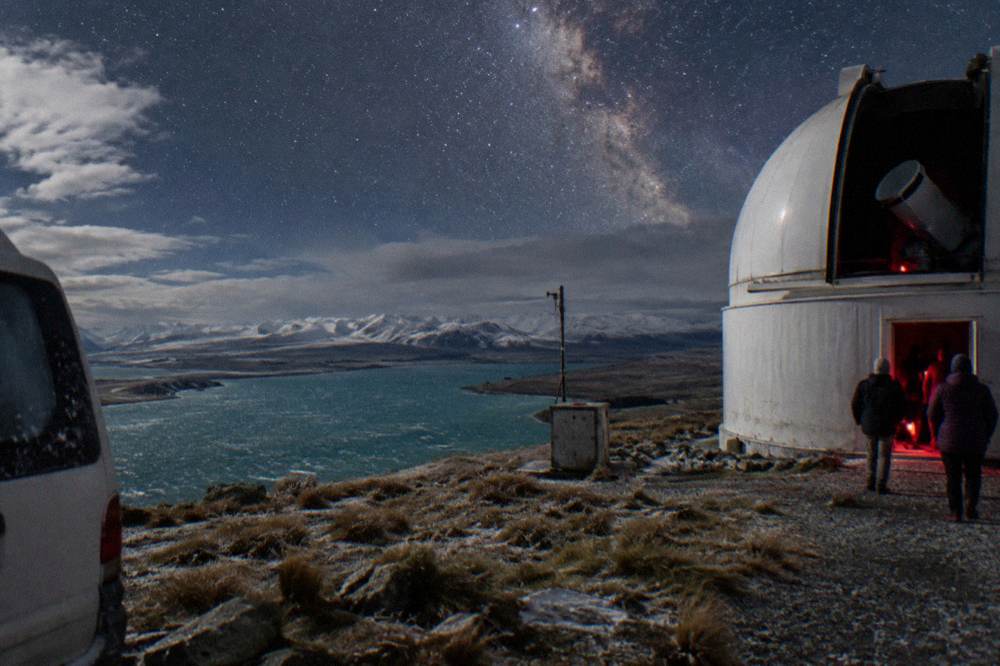
A note on expectations before the practical detail. Photographs of Tekapo's sky, the ones that fill travel feeds, are usually long exposures stacked and processed to pull out colour and detail the human eye never registers standing still. Your eye will see a luminous band, dust lanes and thousands of stars rather than the saturated purples and golds of an image made over thirty seconds of sensor time. That gap between photograph and experience is normal everywhere, not a Tekapo disappointment, and knowing it in advance makes the real thing land better.
When Is The Milky Way Visible At Lake Tekapo?
The Milky Way is visible at Lake Tekapo whenever the sky is clear and dark enough, which varies by season rather than by month ranking. Winter nights are long and dark from early evening; summer nights start late, with true darkness arriving roughly 10 pm in December and January. Tour start times follow sunset, so the season quietly sets your schedule for you. For a fuller picture of how moonlight, weather and tour choice shape the view overhead, the guide to seeing the Milky Way on a Tekapo stargazing tour covers what operators and their telescopes actually deliver.
Daylight saving began on Sunday 27 September 2026 and ends in early April 2027, and that window frames the whole summer experience. Sunset at Tekapo is around 8:30 pm in early November, around 9 pm in December and around 9:20 pm at the December solstice, easing back to about 8 pm by mid March. Those are approximate times, and tour operators do not publish fixed clock starts for exactly this reason: the night begins when the sun and the twilight allow it, and the operators shift their sessions to follow.
The practical consequences are worth spelling out. A midwinter booking can have you standing at a telescope by early evening with hours of dark sky ahead. A Christmas-week booking means a later night, which matters if you are travelling with children or pairing the tour with a long drive the next day. Neither season is the "best" one, and no honest guide will rank the months, but they behave differently, and knowing that helps you choose.
| Season at Tekapo | Sunset (approximate) | What it means for stargazing |
|---|---|---|
| Early November | Around 8:30 pm | Darkness builds through the evening; tours start after sunset |
| December | Around 9 pm, 9:20 pm at the solstice | True darkness starts roughly 10 pm; late finishes |
| Mid March | Around 8 pm | Earlier starts return as daylight saving wears on |
| Winter (June to August) | Early sunset | Long, cold, dark nights; snow is possible |
Nights are cold even in summer at 710 metres above sea level, and snow is possible from June to August, so the season choice is a clothing choice too. The guide on what to wear on a Lake Tekapo stargazing tour handles the layers question in detail.
Choosing a night is where the tour formats start to matter. Three stargazing experiences at Tekapo approach the same sky with different group sizes, prices and settings, from a session at 70 Andrew Don Drive with hot chocolate to a guided summit trip with a 16-inch observatory telescope.
Which Moon Phase Gives The Darkest Sky At Lake Tekapo?
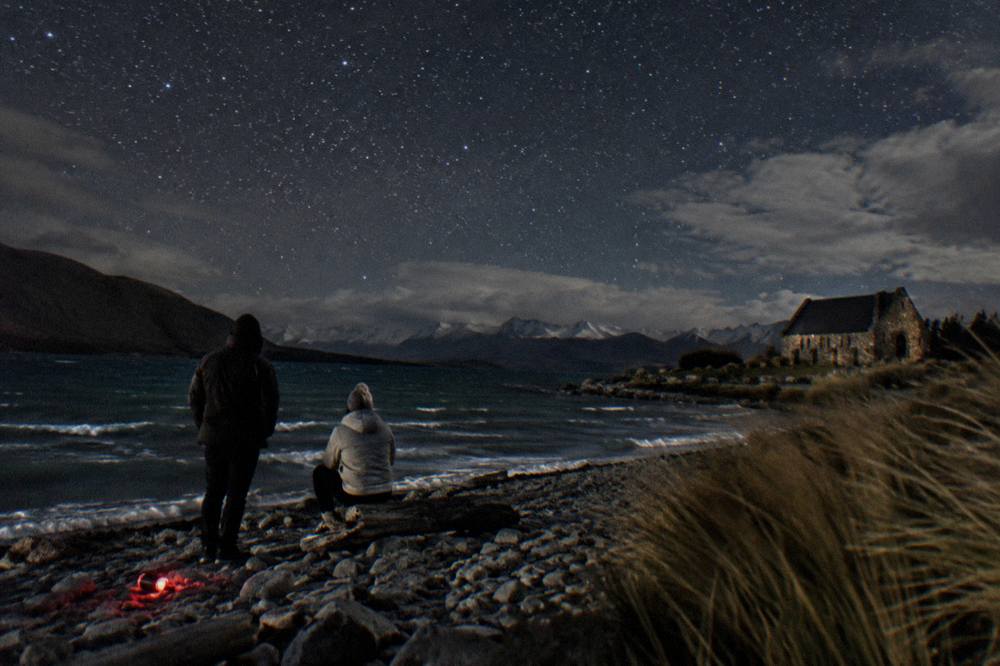
Around new moon the sky is darkest and faint objects show best; a full moon washes out the Milky Way's fainter detail even under Tekapo's protected skies. The moon's phase is the single biggest factor you can plan for, because unlike weather it is predictable years ahead. Aim for the nights on either side of a new moon when booking.
The moon calendar below is approximate within a day, but it is close enough to plan a trip around. If the Milky Way is the specific reason you are coming to Tekapo, book a night in the darker half of the lunar cycle and you stack the odds in your favour before the weather has its say.
| New moon (darkest window) | Full moon (bright sky) |
|---|---|
| Around 9 November 2026 | Around 24 November 2026 |
| Around 9 December 2026 | Around 24 December 2026 |
| Around 7 January 2027 | Around 22 January 2027 |
| Around 6 February 2027 | Around 21 February 2027 |
| Around 8 March 2027 | Around 22 March 2027 |
A full moon is not a wasted night. Bright objects, planets and the moon itself are spectacular through a telescope, and guides on many of the tours here point out whatever the sky is offering. But the Milky Way's faint glow, the part that makes the Mackenzie Basin famous, suffers most when moonlight brightens the background sky. If the galactic core is the goal, the new moon end of the cycle is where you want your booking to sit.
The waxing and waning halves of the cycle behave differently in one useful way. In the nights after a new moon, the moon sets early or stays absent from the evening sky, so a post-new-moon booking keeps your session moonless while your holiday still has room to move. In the nights before a full moon, the moon rises early and climbs through exactly the hours the tours run. Reading the calendar in that direction, rather than just circling the new moon date itself, often opens up more bookable dark nights across a week-long stay.
The cheapest per-person stargazing tour here also happens to be the most reviewed: the Alpine Stargazing Experience with a Guide from Silver River Stargazing runs 1 hour 15 minutes, from $55.00 per person, rated 4.6 across 864 reviews. It caps groups at 10, provides warm down jackets, and includes roundtrip transport from the check-in office at 12 Rapuwai Lane to the stargazing site. Its telescopes are 14-inch modern instruments, and a link to a digital photo is included.
That price point makes it an easy first stargazing booking, and the jacket provision is one of only two here, the other being the Mount John Summit Experience. For visitors who want the observatory itself rather than a dark field, the summit tour is the step up, and the guide to the Mount John Observatory stargazing tour compares the two in full.
Which Lake Tekapo Stargazing Tour Shows The Most?
The Mount John Summit Experience from the Dark Sky Project has the largest telescope of the three: a 16-inch instrument in a dome at 1,029 m, with exclusive summit access, from $133.00 per person, rated 4.6 across 347 reviews. The Chameleon Stargazing session at 70 Andrew Don Drive is the highest rated with 100+ reviews at 4.9 across 788, from $72.00. Each suits a different traveller.
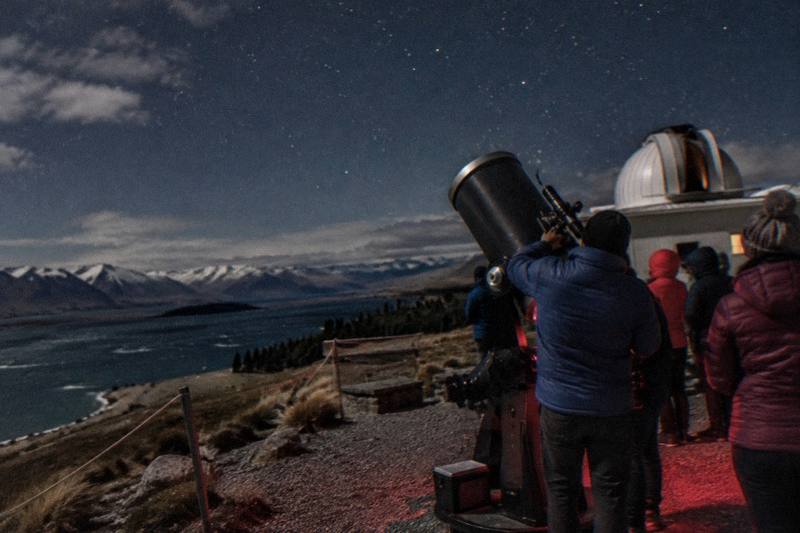
The summit tour runs 1 hour 45 minutes including the bus from the Dark Sky Project base at 1 Motuariki Lane, with minimum age 10. It involves a walk of about 100 metres up a gravel incline plus a few steps in the dark, so moderate fitness helps, and it is not wheelchair accessible. Photos are allowed with the flash off, and Extreme Cold Weather jackets are loaned. Hotel pickup is not included; you meet at the base and return transport to the summit is part of the ticket.
| Tour | Operator | Duration | From (USD, per person) | Rating and reviews | Group max |
|---|---|---|---|---|---|
| Lake Tekapo: Stargazing Experience | Chameleon Stargazing | 1 hour 30 minutes | $72.00 | 4.9 across 788 | Not stated |
| Alpine Stargazing Experience with a Guide | Silver River Stargazing | 1 hour 15 minutes | $55.00 | 4.6 across 864 | 10 |
| Mount John Summit Stargazing Experience | Dark Sky Project | 1 hour 45 minutes | $133.00 | 4.6 across 347 | Not stated |
| Ultimate Stargazing Experience | Go Tekapo | 2 hours | $124.24 | 5.0 across 17 | 10 |
| Soak in the Stars | Tekapo Star Gazing | 1 hour 30 minutes | $101.55 | 4.3 across 121 | 34 |
| Cowan's Private Observatory | Dark Sky Project | 1 hour 30 minutes | $80.88 | 3.9 across 91 | 22 |
If you're still deciding where to base your trip, the guide to Mount Cook versus Lake Tekapo compares tour departures, prices and drive times.
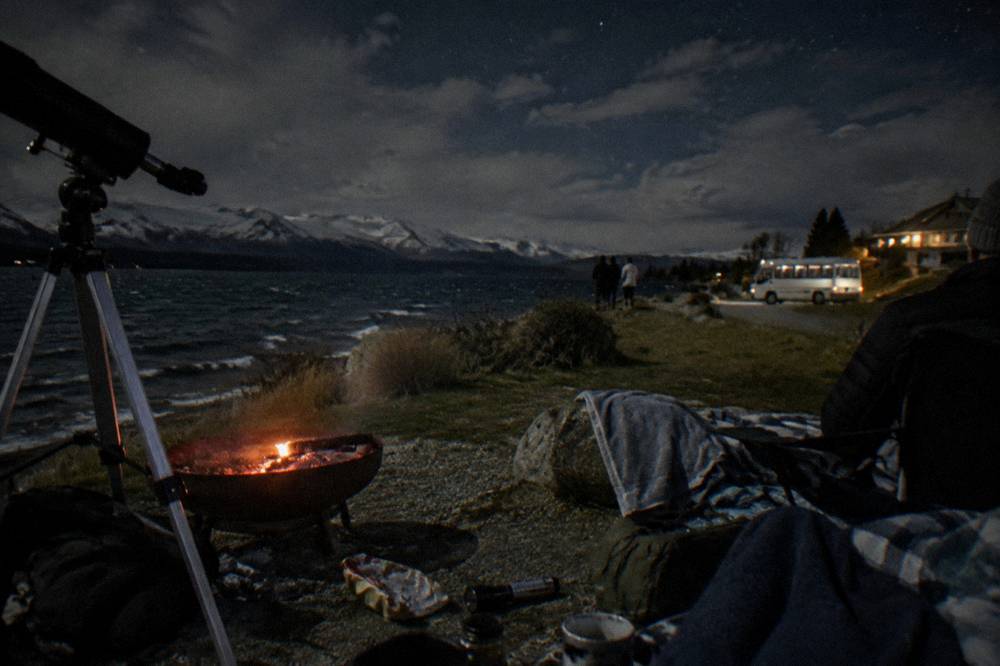
The Chameleon session meets at 70 Andrew Don Drive, a four-minute drive from the village centre, with no transport listed. It brings a 9.25-inch telescope plus a smart telescope, outdoor seats, pillows, mattresses, blankets, a fire bowl with marshmallows and hot chocolate with lactose-free and gluten-free options on request. Edited photos are included. It is the highest rated stargazing tour at Tekapo with a large review pool, and the mid-price $72.00 entry sits between the alpine field session and the summit experience.
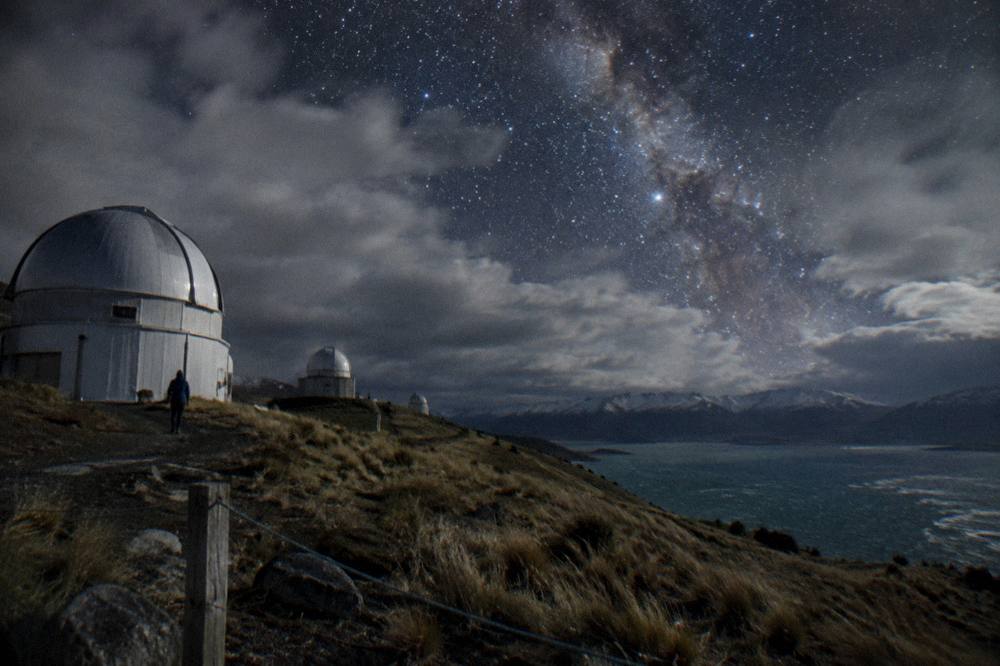
The summit tour remains the one for telescope purists. The dome instrument is matched only by Go Tekapo's 16-inch telescope, and the summit location itself carries a darkness advantage: you are above the village's residual glow with the observatory that the lighting controls were written to protect. Whether the difference is visible to your eye rather than to the equipment is a fair question, and the honest answer is that the sky, not the ticket tier, decides the headline act on any night. What the summit tour offers is the setting and the instrument, not the galaxy.
Booking early matters more on moon-dark weekends than on ordinary nights, since everyone reading a moon calendar is competing for the same dates. The booking terms here state free cancellation up to 24 hours before the start for a full refund, which makes an early new-moon reservation a low-risk move: lock the dark window in, and adjust if your travel plans shift.
Do You Need A Telescope To See The Milky Way At Lake Tekapo?
No. Under a clear, moonless Tekapo sky the Milky Way band is a naked-eye object, and that is precisely why the reserve exists. Telescopes add planets, star clusters, nebulae and galaxies, and most tours here use guided pointing, handheld lasers or dome instruments to find them. The Milky Way itself is usually the widest-view, no-equipment moment of the night.
This shapes which tour is worth it for you more than price does. A traveller whose whole goal is to stand under the galactic band and simply look needs darkness, a clear horizon and time, and the shorter, cheaper sessions deliver that. A traveller who wants to see the rings of Saturn, the Jewel Box cluster or the Tarantula Nebula needs the instruments and the guide, and gets more from the summit or ultimate sessions.
| What you want to see | Naked eye under dark sky | Through a tour telescope |
|---|---|---|
| Milky Way band and dust lanes | Yes, weather and moon permitting | Wide-field view of sections |
| Bright planets | Yes, as steady points | Discs, rings and moons |
| Southern Cross and pointers | Yes, easy | Guide points them out |
| Faint clusters and nebulae | Barely or not at all | Clear views, guided |
| Galaxies beyond the Milky Way | No | Visible in the eyepiece |
The tour guides earn their fee in the second and third rows of that table. Handheld lasers, used on the Dark Sky Project's Crater Experience among others, sweep a green line to the exact star being named, which turns a confusing scatter into a map within minutes. Self-guided stargazers can find free dark spots too, and the article on free places to stargaze at Lake Tekapo covers those, but the equipment and the interpretation are what the paid sessions add.
There is a middle path worth naming. Give your eyes ten to fifteen minutes away from phone screens and headlights, and the naked-eye sky at Tekapo deepens noticeably as your dark adaptation builds, and a single glance at a phone undoes much of it.
One more consideration: the Soak in the Stars tour at Tekapo Springs pairs the sky with hot pools rather than maximising telescope time. It runs 1 hour 30 minutes from $101.55 per person, rated 4.3 across 121 reviews, with hot pool use part of the ticket, minimum age 10 and a group cap of 34, the largest here. Hot drinks are provided, and township pickup runs subject to availability and on request only. It is the sociable, warm option rather than the astronomer's one.
What About Summer Nights And Sunset Times At Tekapo?
Summer stargazing at Lake Tekapo starts late: sunset around 9 pm in December, with true darkness arriving roughly 10 pm in December and January, so tour start times follow sunset and sessions finish late. Winter inverts this with long dark evenings from early on, though cold and possible snow from June to August raise the comfort question instead.
Neither season wins on paper. Summer gives milder nights but burns your evening before the sky is ready, which matters for families and for anyone driving back to Twizel or Fairlie afterwards. Winter hands you darkness at a sociable hour and typically crisper air, at the cost of genuine cold; the Dark Sky Project notes nights are cold even in summer, so winter is a serious layering exercise.
The blog post on the best time to stargaze in Lake Tekapo goes deeper on seasonal trade-offs. The short version for planning: pick your season for your schedule and comfort, then pick your date by the moon, then accept the weather as the final word.
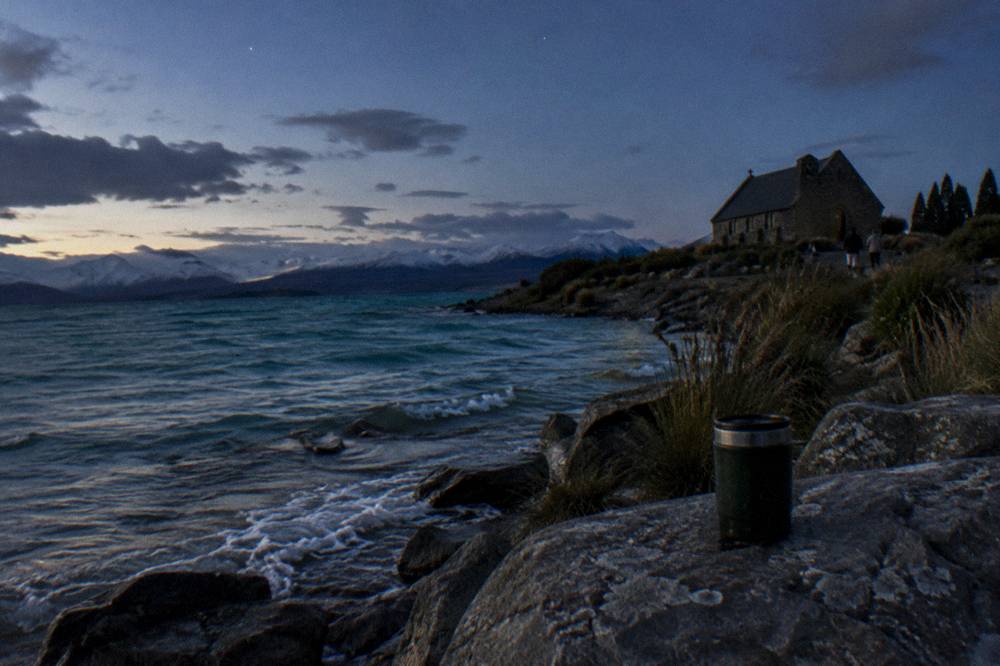
A late summer start also reshapes the rest of your day at Tekapo. With the tour not beginning until well after dark, the afternoon opens up for the lakefront walk, the Church of the Good Shepherd in daylight, or one of the village's daytime tours, and dinner can happen at a relaxed hour before check-in. Winter travellers get the opposite gift: a tour that ends early enough for a full night's sleep before a Mount Cook or Christchurch drive the next morning. Reading your stargazing booking against your daytime itinerary, rather than in isolation, is one of the simplest ways to make a Tekapo stop feel generous instead of rushed.
What Happens If Cloud Blocks The Milky Way On Your Tour Night?
Each operator handles cloud differently, and none promises the sky. The Dark Sky Project offers an indoor night-time experience, a reschedule subject to availability, a voucher or a refund when outdoor stargazing is not possible. Tekapo Star Gazing runs with an indoor session if the sky is hidden, with a 25% refund if under 30 minutes of telescope viewing happens. Always check the terms on the booking page. If the cloud policy leaves you wondering which experience to book, the comparison of the two Dark Sky Project tours covers what each ticket includes when the weather turns.
The differences matter enough to read before you pay. An indoor alternative is a real product, and on a clouded night some travellers enjoy it, but it is not the same experience as standing under the stars and it is not a guaranteed sky view. The refund and reschedule paths are where the operators genuinely diverge, and those policies sit on the booking pages of the individual tours. The guide to stargazing tour weather and cancellations walks through the six stargazing tours' approaches side by side.
| Operator | If the sky is clouded |
|---|---|
| Dark Sky Project | Indoor night-time alternative, or reschedule subject to availability, a voucher or a refund |
| Tekapo Star Gazing | Tour runs with an indoor session; 25% refund if under 30 minutes of telescope viewing |
| Chameleon Stargazing | Weather handling per the booking page |
| Silver River Stargazing | Weather handling per the booking page |
| Go Tekapo | Weather handling per the booking page |
Free cancellation up to 24 hours before the start for a full refund is stated across the stargazing listings, so a forecast that turns bad a day out gives you an exit. Inside that 24-hour window, the weather policy of the specific operator takes over. Operators decide on the day, and the sky at 710 metres can shift between dinner and midnight, which is why reschedule options are worth more than they look when you are staying several nights in the village rather than passing through.
Mackenzie cloud has its own character, worth knowing before you write off a forecast. The basin sits between mountain ranges, and cloud can change quickly, so the sky at 6 pm says little about the sky at 11 pm. This is why the operators wait until the day itself to decide, and why a same-day booking, possible at the Dark Sky Project with limited spots, can sometimes snatch a clear night that morning forecasts had written off. Building one flexible night into a Tekapo stay costs a little more accommodation and buys a lot of odds.
All of which loops back to the date strategy. Book the new-moon window, book it early, keep a spare night in the village if your itinerary allows, and treat the moon calendar as the one sky predictor you can rely on. Lake Tekapo Day Tours compares every stargazing, scenic flight and day tour option that visits or runs at the village, so the rest of your Mackenzie itinerary can be planned on the same figures.
Common Questions About Lake Tekapo Milky Way Tours
Can You See The Milky Way On A Lake Tekapo Stargazing Tour?
You can, when the sky is clear and the moon is dark, but no operator guarantees it. The Aoraki Mackenzie Dark Sky Reserve designation and decades of lighting controls make Tekapo an exceptional place to try, and the Milky Way band is a naked-eye object under good conditions.
Which Moon Phase Is Best For A Lake Tekapo Stargazing Tour?
Around new moon the sky is darkest and faint objects, including the Milky Way's detail, show best. A full moon washes out faint objects. New moon falls around 9 December 2026, 7 January 2027 and 6 February 2027, approximate within a day.
How Much Does A Stargazing Tour At Lake Tekapo Cost?
Stargazing tours here run from $55.00 per person for the Silver River alpine session to $133.00 for the Mount John Summit Experience. The Chameleon session at 70 Andrew Don Drive is from $72.00, Cowan's Observatory from $80.88, Soak in the Stars from $101.55 and the Go Tekapo ultimate session from $124.24.
Do Stargazing Tours At Lake Tekapo Provide Warm Jackets?
Two do: the Silver River Alpine Stargazing Experience provides warm down jackets, and the Dark Sky Project Mount John Summit Experience loans Extreme Cold Weather jackets. The others do not state jacket provision, so dress warmly regardless; nights are cold even in summer.
What Happens If It Is Cloudy On My Stargazing Night?
The Dark Sky Project offers an indoor alternative, a reschedule subject to availability, a voucher or a refund. Tekapo Star Gazing runs with an indoor session and gives a 25% refund if under 30 minutes of telescope viewing happens. All listings state free cancellation up to 24 hours before the start for a full refund.
Do You Need A Telescope To See The Milky Way At Tekapo?
No. Under a clear, moonless sky the Milky Way band is visible to the naked eye. Telescopes add planets, clusters, nebulae and distant galaxies, which is what the guided tours and their instruments are for.